
Mental health symbols on a genogram
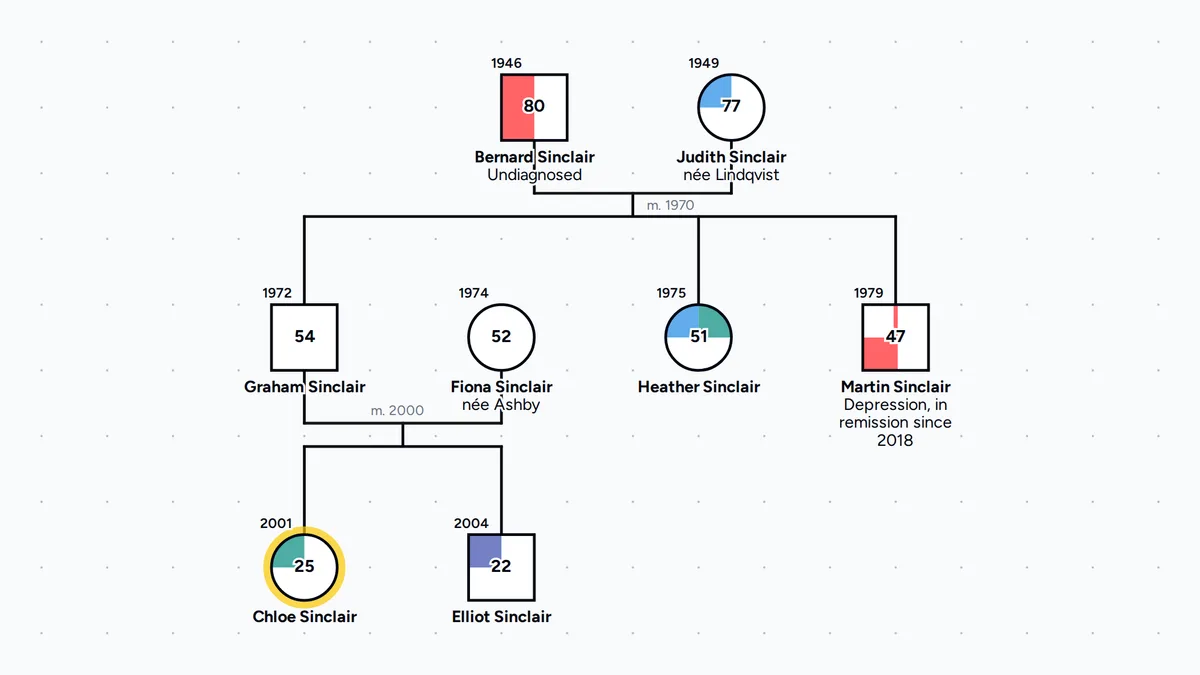
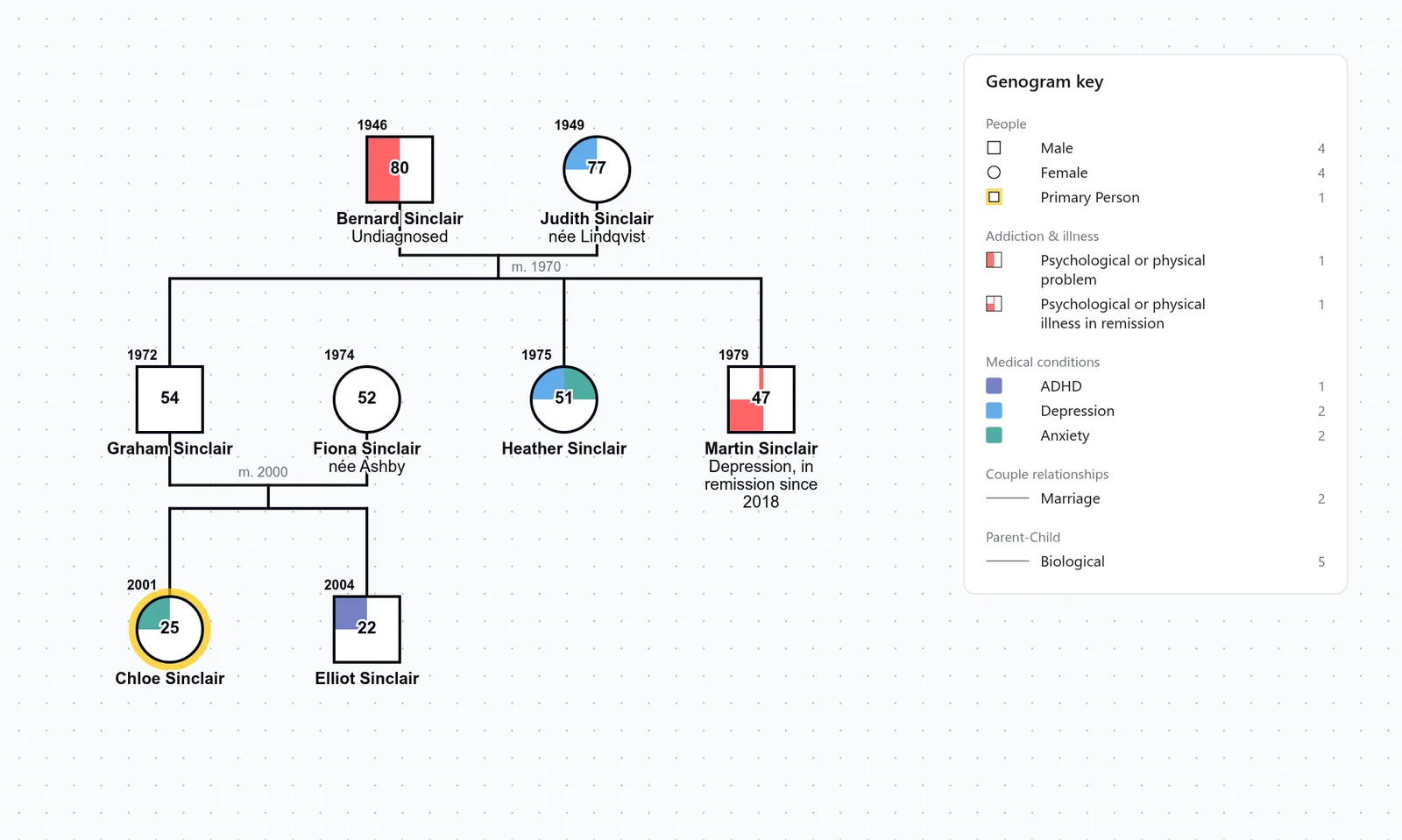
This page shows the Sinclair family over three generations, where Judith and her daughter Heather have the blue depression color and Heather's brother Martin has the McGoldrick fill for an illness in remission. Judith's husband Bernard has the red illness fill for a problem that was never diagnosed, and the grandchildren Chloe and Elliot have colors for anxiety and ADHD.
Updated October 2026Notation follows McGoldrick, Gerson and Petry, Genograms: Assessment and Treatment (4th ed., 2020)
Cite this diagram
Genogram Pro. (2026, October 20). Mental health symbols on a genogram [Diagram]. https://genogrampro.com/guide/genogram-symbols/mental-health
Illness fill
Bernard's square has a red left half for a psychological or physical problem that was never diagnosed.
Two condition colors
Heather's circle has a blue quarter for depression and a teal quarter for anxiety.
Remission fill
Martin has the remission fill for an illness in remission, with the label "Depression, in remission since 2018".
ADHD color
Elliot's ADHD is an indigo quarter of his square, with no illness fill.
Compare the illness fills with the condition colors
The McGoldrick illness fills, which the editor draws in red, mean that a psychological or physical problem exists but not which one, while a condition color is drawn in one quarter of the symbol and the diagnosis is listed by name in the key.
Illness
A physical or psychological problem.
Illness in remission
A physical or psychological illness in remission.
Recovery with an illness
Recovery from substance abuse, with a physical or mental problem.
Illness and substance abuse
A serious mental or physical problem together with substance abuse.
Illness recovery with substance abuse
Recovery from a physical or mental illness, with an alcohol or drug problem.
Recovery from both
Recovery from substance abuse and from a physical or mental problem.
Depression
A blue quarter of the symbol.
Anxiety
A teal quarter of the symbol.
Bipolar
A coral quarter of the symbol.
Schizophrenia
A slate grey quarter of the symbol.
PTSD
An orchid quarter of the symbol.
ADHD
An indigo quarter, used in place of the illness fill.
Autism
A cyan quarter, used in place of the illness fill.
Choose a fill or a color for each person
- Use a color for a named diagnosis. The editor fills one quarter of the symbol in the condition's color and adds the condition to the key, as for Judith's depression.
- Give a second diagnosis the next quarter. Heather has depression and anxiety, so her circle has a blue top-left quarter and a teal top-right quarter.
- Use the illness fill when no diagnosis is named. The editor fills the left half of the symbol red and lists it in the key as "Psychological or physical problem", as for Bernard, whose label is "Undiagnosed".
- Use the remission fill for an illness in remission. A condition color has no remission state, so Martin's depression is drawn as a red lower-left quarter with a red line from the top edge to the center, and the diagnosis is written in his label.
- Never give one person a fill and a color. If a color were drawn over the red fill on Bernard's square, only a red lower-left quarter would be visible, which looks like the remission fill.
- Draw autism and ADHD with a color. Elliot's ADHD is an indigo quarter, as in the neurodivergent family genogram, where autism and ADHD appear in two generations.
The fills section of the genogram symbols chart shows the substance use fills beside these, and condition colors for physical illness are explained in the medical genogram guide.
Avoid two common mistakes with mental health symbols
Give ADHD and autism a color
The illness fill is listed in the key as "Psychological or physical problem", so Elliot's ADHD is drawn in indigo and listed as ADHD instead.
Use the remission fill for a remission
A blue depression quarter means only that Martin has depression, so his remission since 2018 is drawn with the remission fill and written in his label.
Questions people ask
Read the medical genogram guideWhat are the genogram symbols for mental health?
A mental illness is drawn by filling part of the person's symbol. A McGoldrick fill is used for a psychological or physical problem, an illness in remission or a recovery, and a condition color for a named diagnosis such as depression or bipolar disorder.
What is the genogram symbol for mental illness?
The symbol for a psychological or physical problem is a square or circle with its left half filled in, and it is listed in the key under that name. The fill is the same for any illness, so write the diagnosis under the name or give the person a condition color instead.
How do you show depression on a genogram?
Give the person the depression condition color, which the editor draws as a blue quarter of the symbol and lists as Depression in the key. For depression in remission, use the remission fill and write the diagnosis under the name, as for Martin.
How do you show anxiety on a genogram?
Add anxiety as a condition, and the editor fills a teal quarter of the symbol. A person with both depression and anxiety, like Heather, has a blue quarter and a teal quarter.
How do you draw autism or ADHD on a genogram?
Draw them with their condition colors, cyan for autism and indigo for ADHD, rather than the illness fill, which is the same for any condition.
Start your genogram from this example
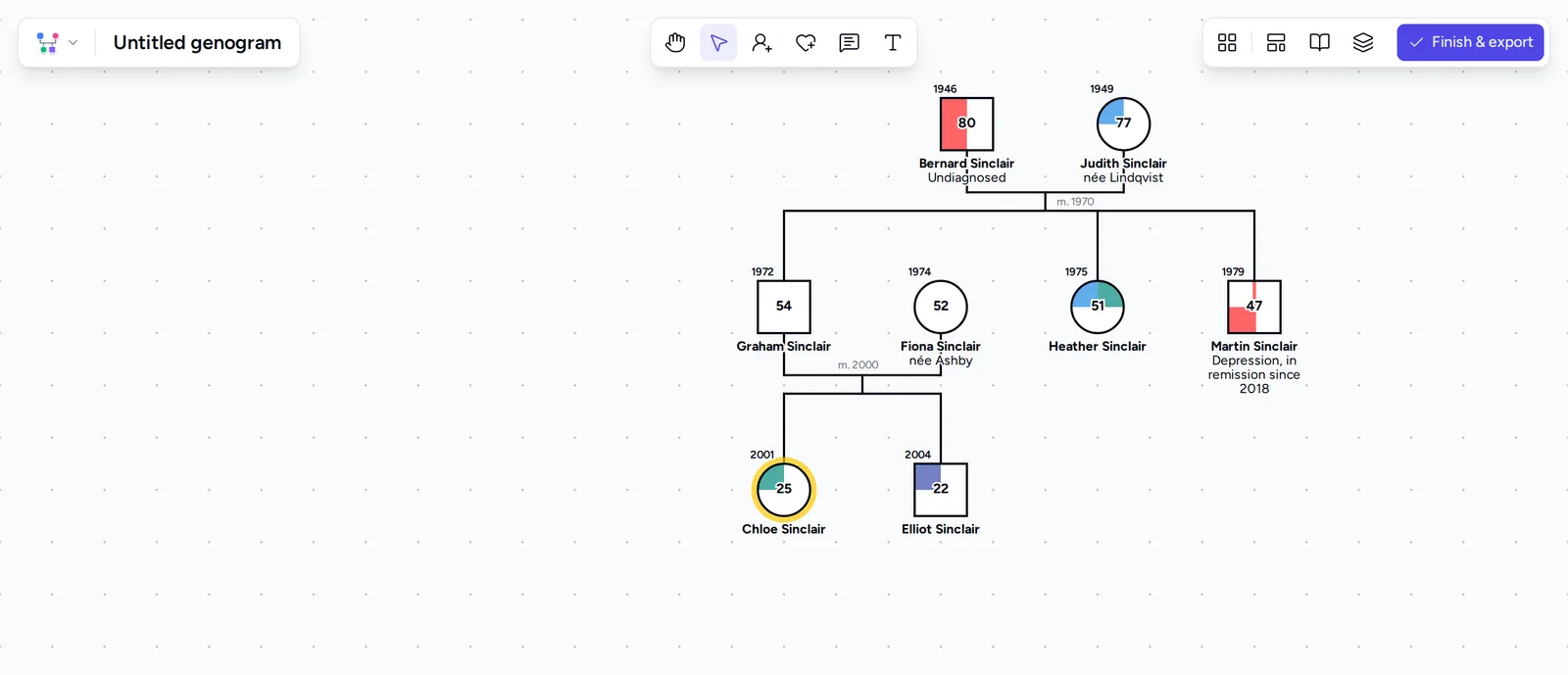
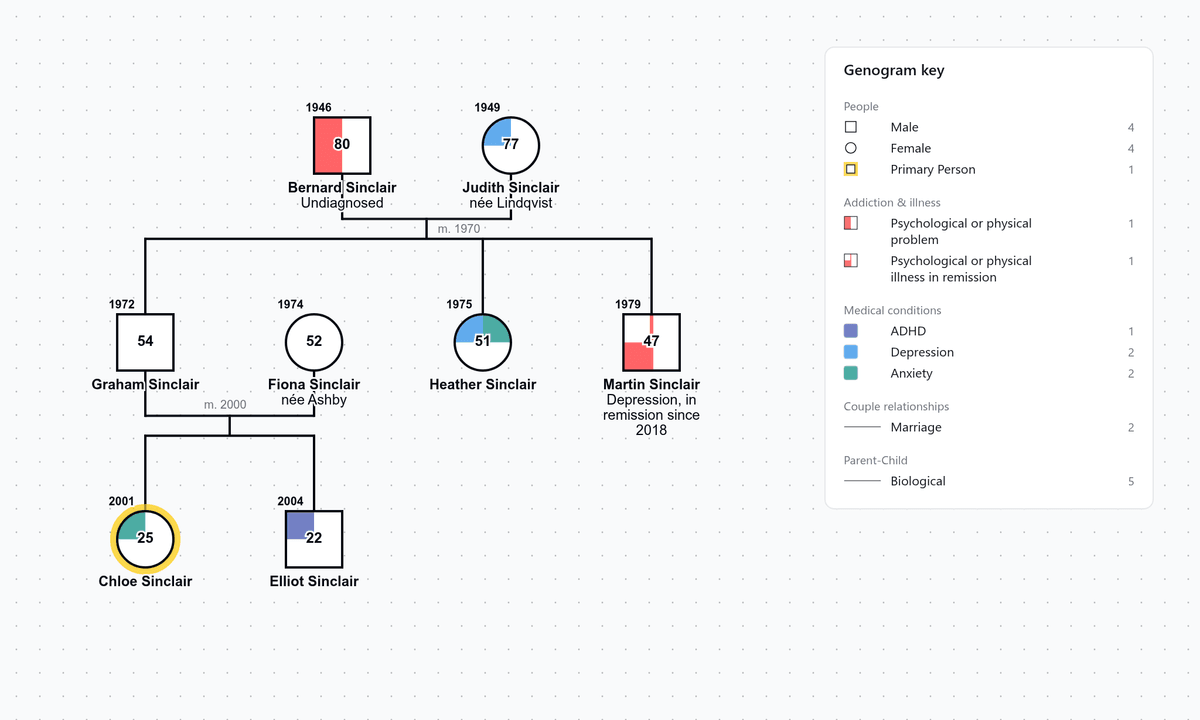
Open it in the editor, swap in your own names and dates, and export it as a PNG or PDF.