
Genogram examples
These 23 genogram examples show fictional families drawn in standard notation, each with a key. They are grouped into simple, family therapy, family structure and medical examples, and you can open any of them as a template in the free genogram maker.
Updated October 2026
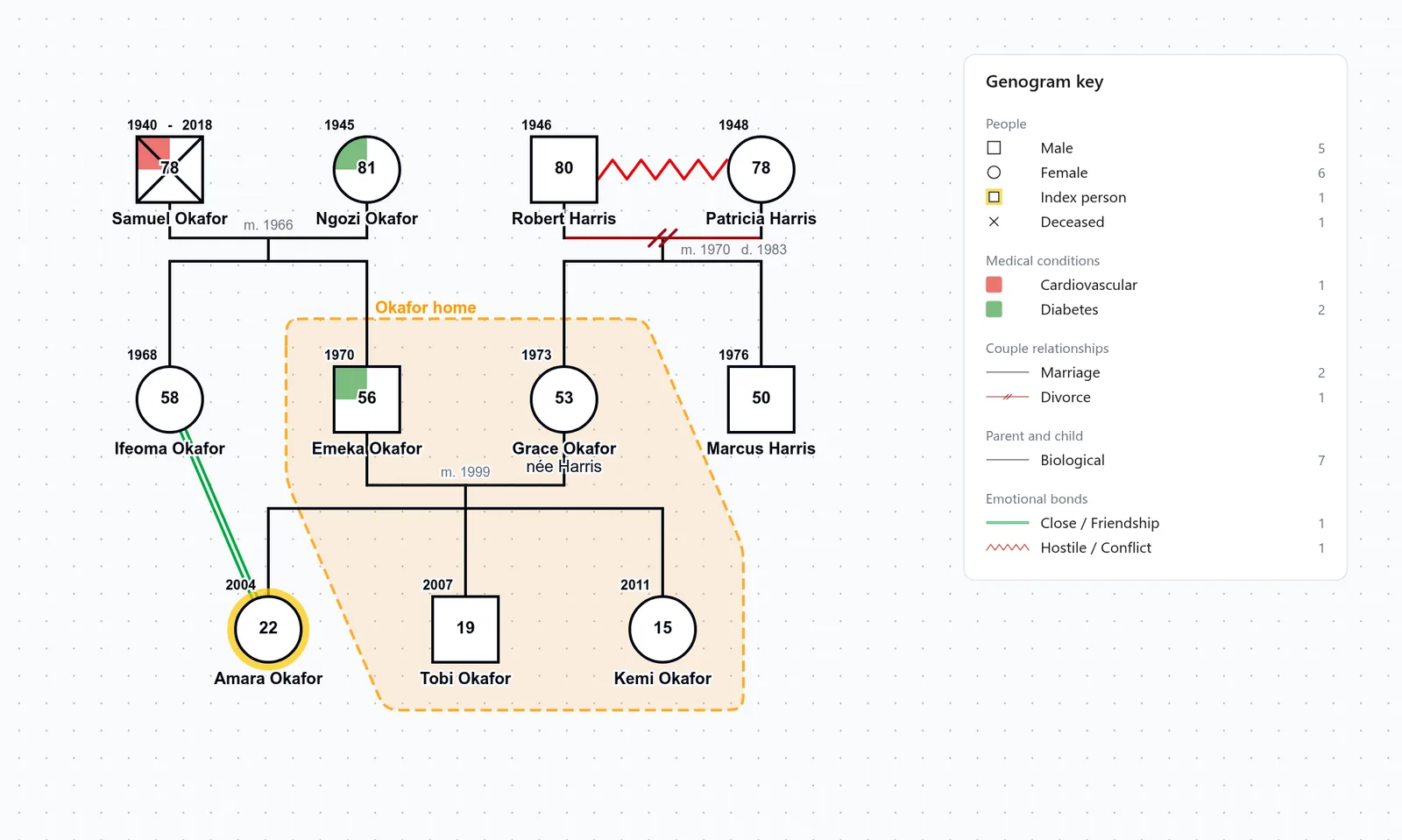
Index person
Amara is drawn with a yellow outline.
Death
An X through Samuel's square, with his birth and death years.
Divorce
Two slashes on Robert and Patricia's couple line.
Birth order
Children are drawn oldest to youngest, left to right.
Diabetes in two generations
Ngozi and her son Emeka share the green fill.
Okafor home
Emeka, Grace, Tobi and Kemi live here.
Simple genogram examples
Each of these families is drawn with the symbols found in most genograms, and the labeled example has every common symbol at least once.
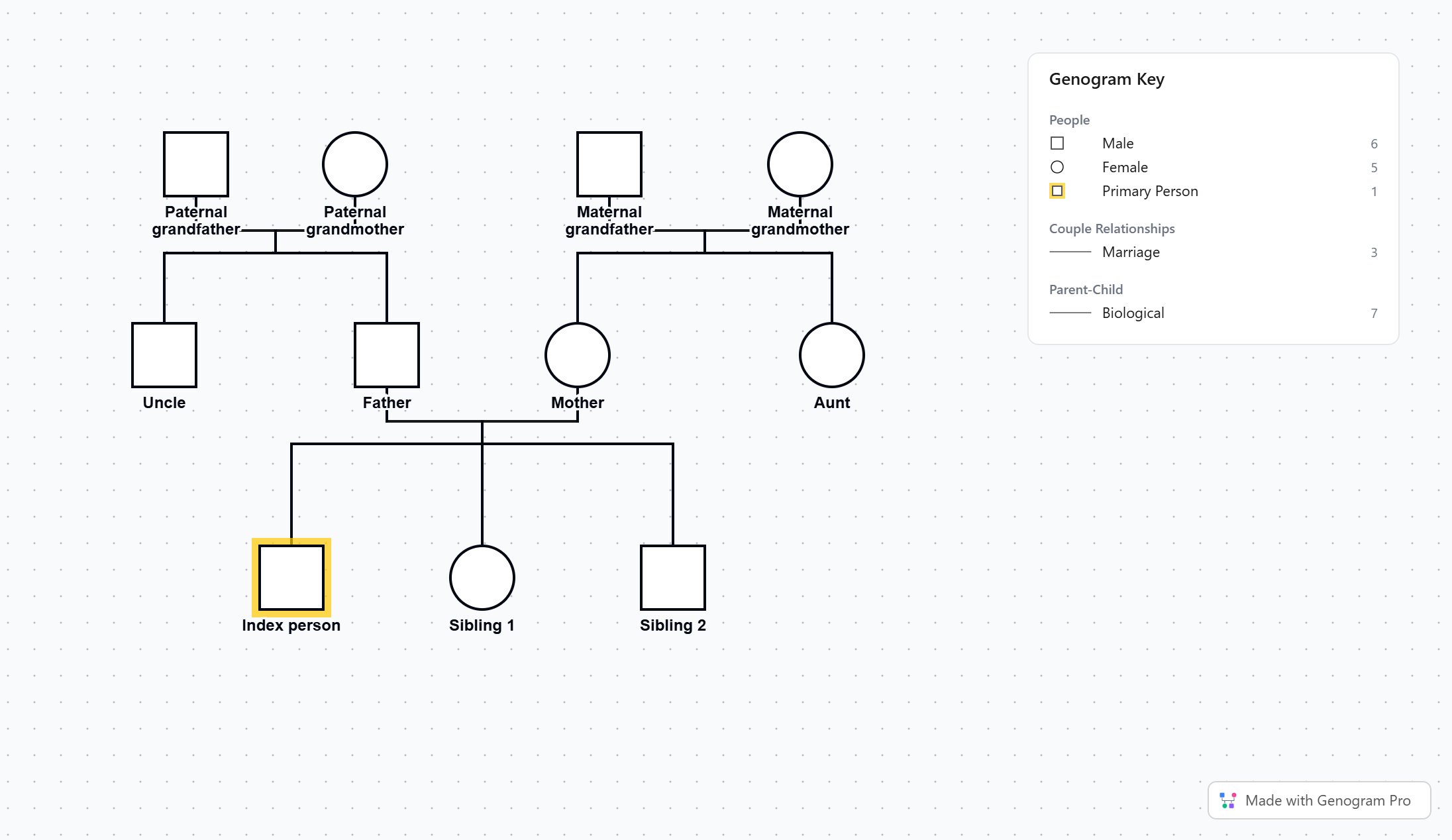
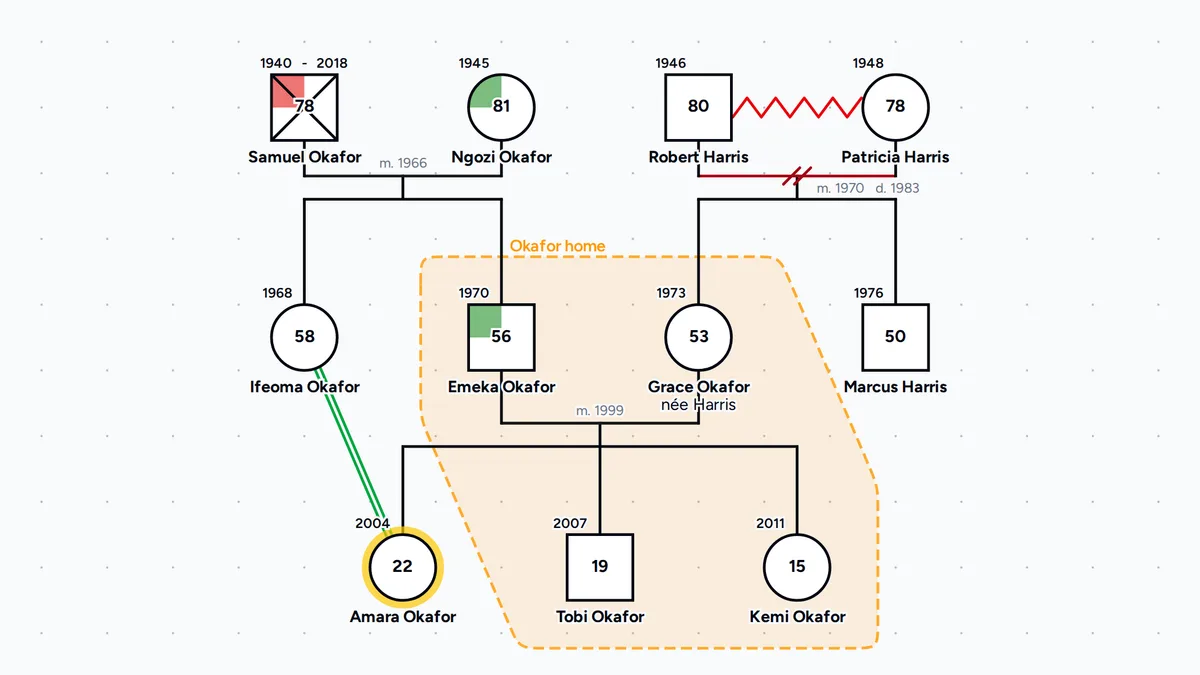 Basic genogram exampleHow to draw three generations of one family with the basic symbols, lines and a key.
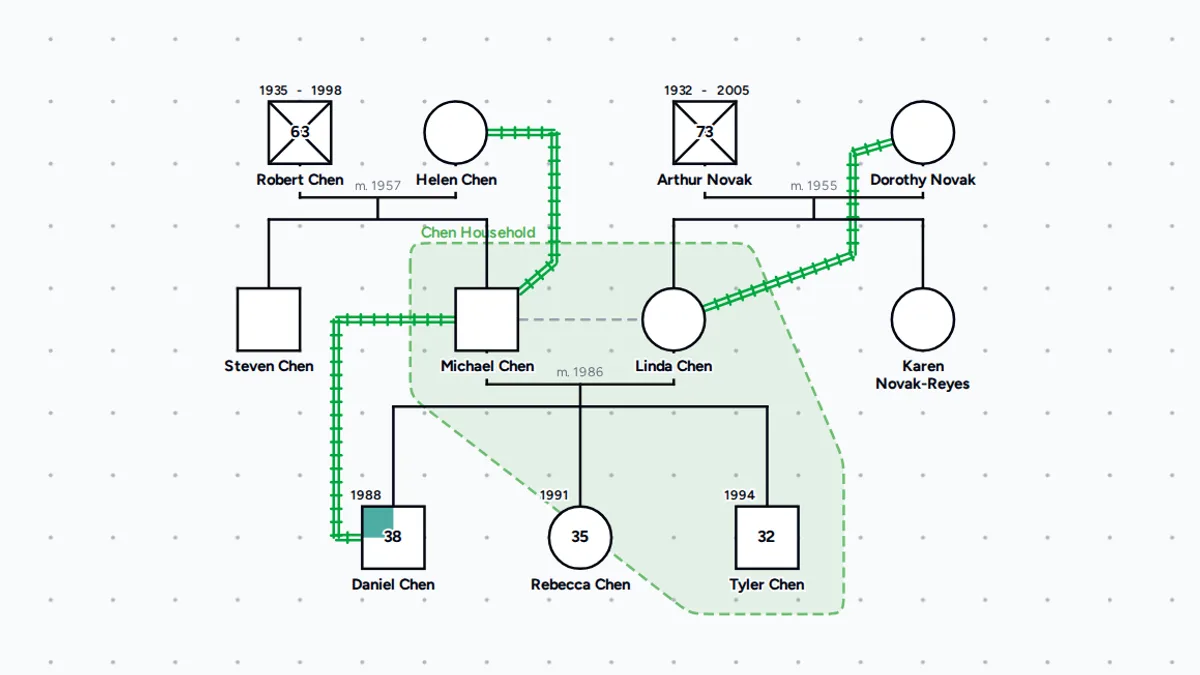 3 generation genogram exampleHow to draw three rows with grandparents on both sides, the parents with their brothers and sisters, and three grandchildren, with a birth year on every person.
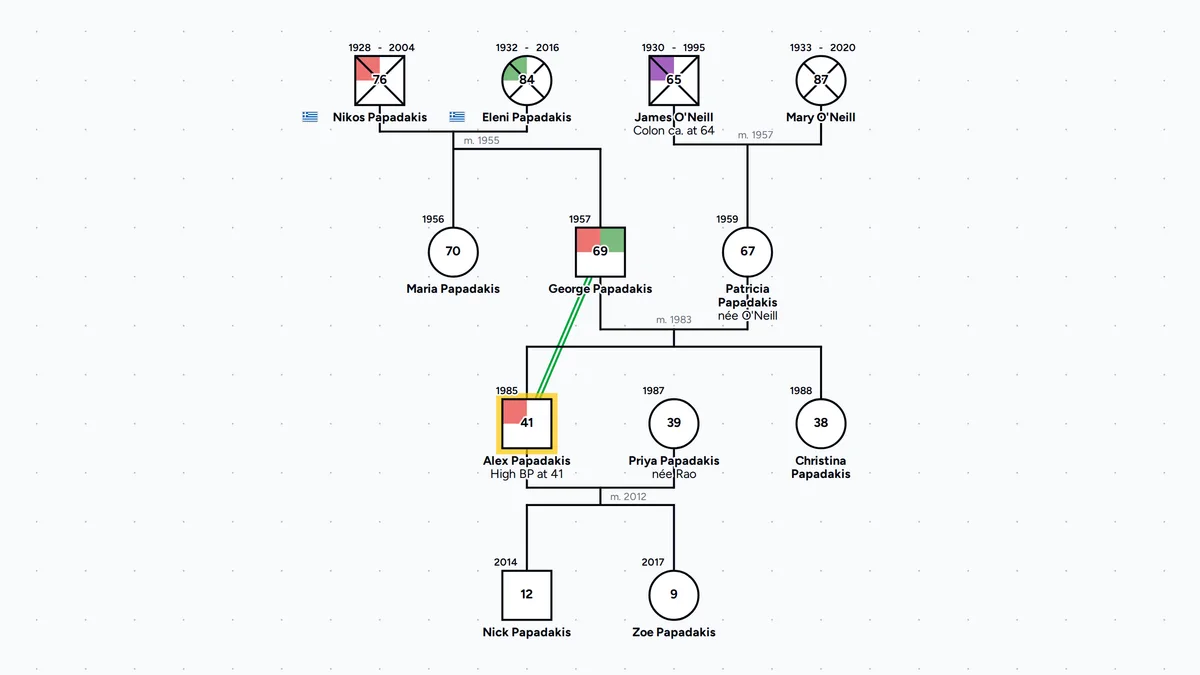 4 generation genogram exampleHow to draw four generations of one family with a year on every person, death and marriage, and heart disease in three generations.
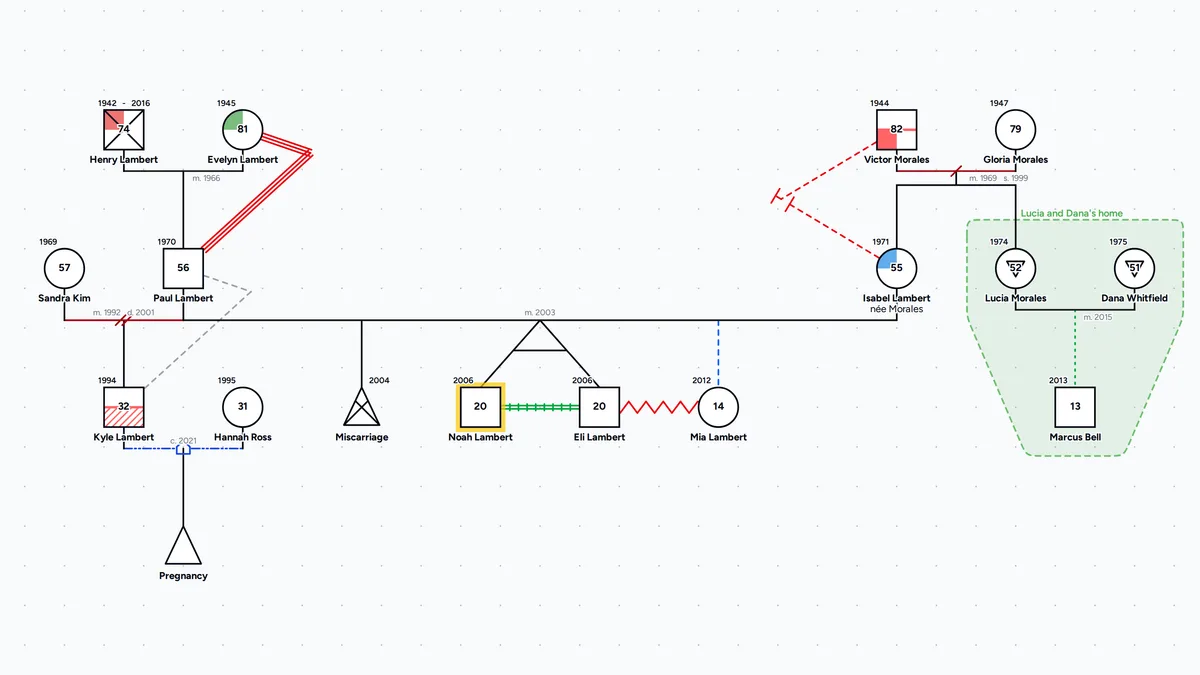 Labeled genogram example with every symbolHow to draw twins, adoption, foster care, divorce, a same-sex marriage, a miscarriage and substance use in one labeled family.
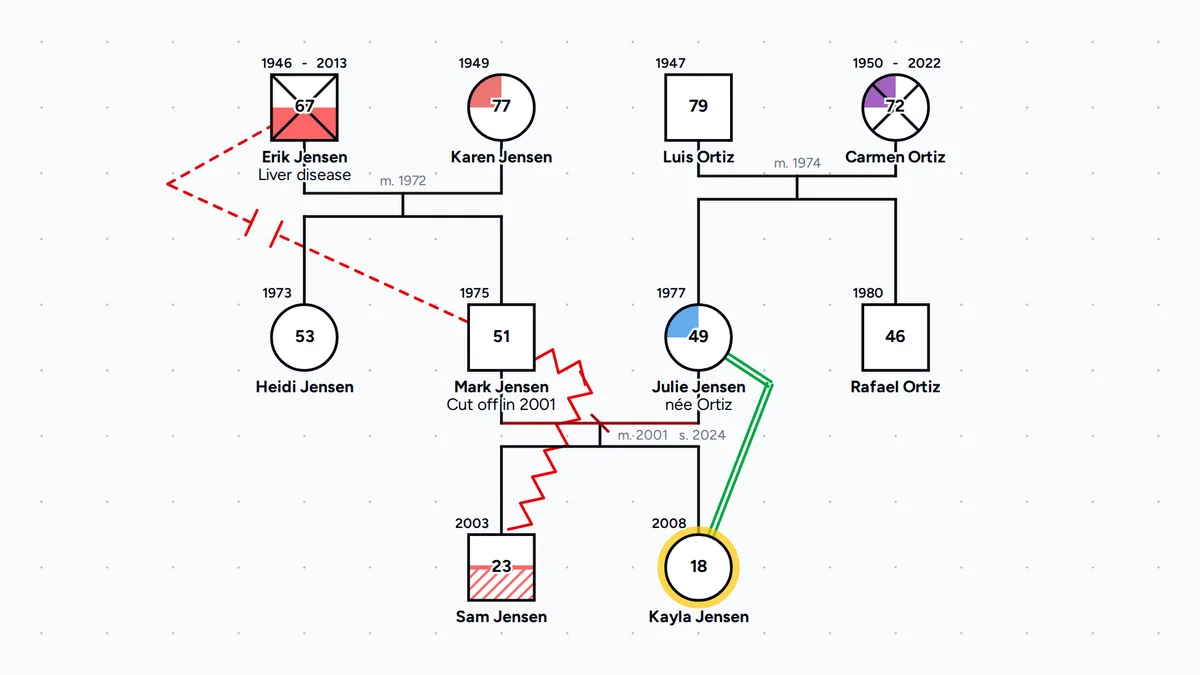 Genogram vs family tree: the same family drawn both waysHow to add a cutoff, a conflict, a drinking pattern and health conditions to the same family tree to make a genogram.
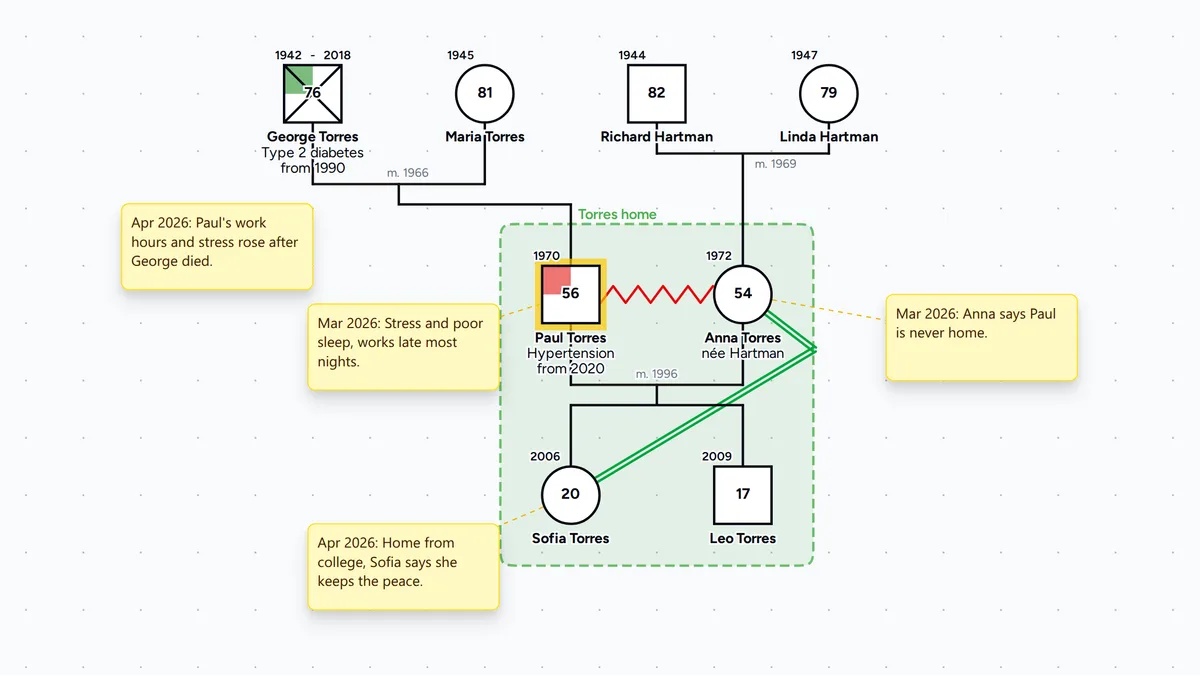 Annotated genogram example with clinical notesHow to add dated session notes, a canvas note and a private note to a client's genogram.
Family therapy genogram examples
These genograms show the family patterns therapists look for, such as triangles, cutoffs, enmeshment, parentification and substance use.
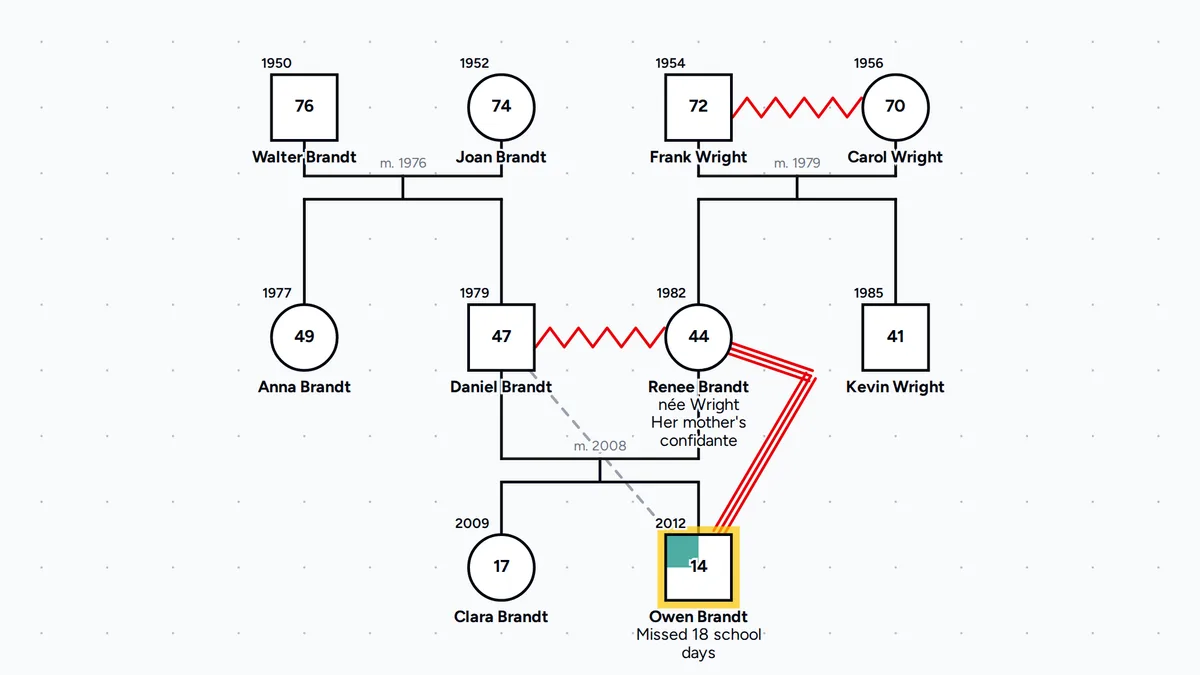 Triangulation genogram exampleHow to draw a family triangle with a conflict line, a fused line and a distant line.
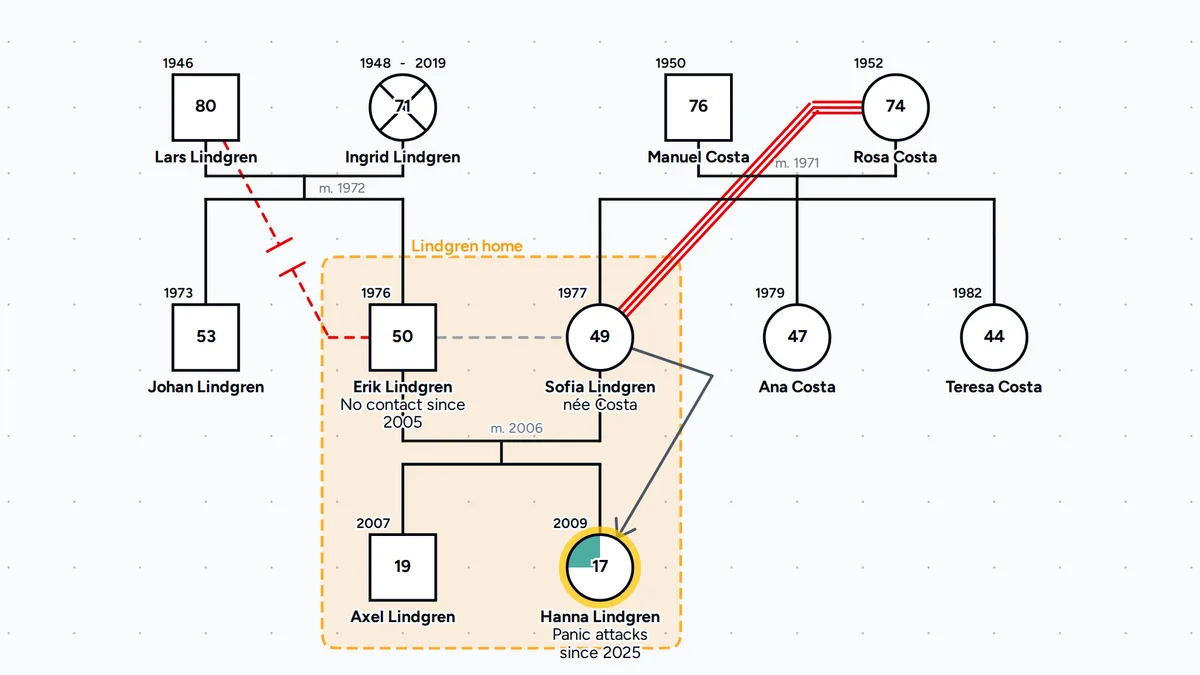 Bowen genogram exampleHow to draw cutoff, fusion, the family projection process and sibling position in one family.
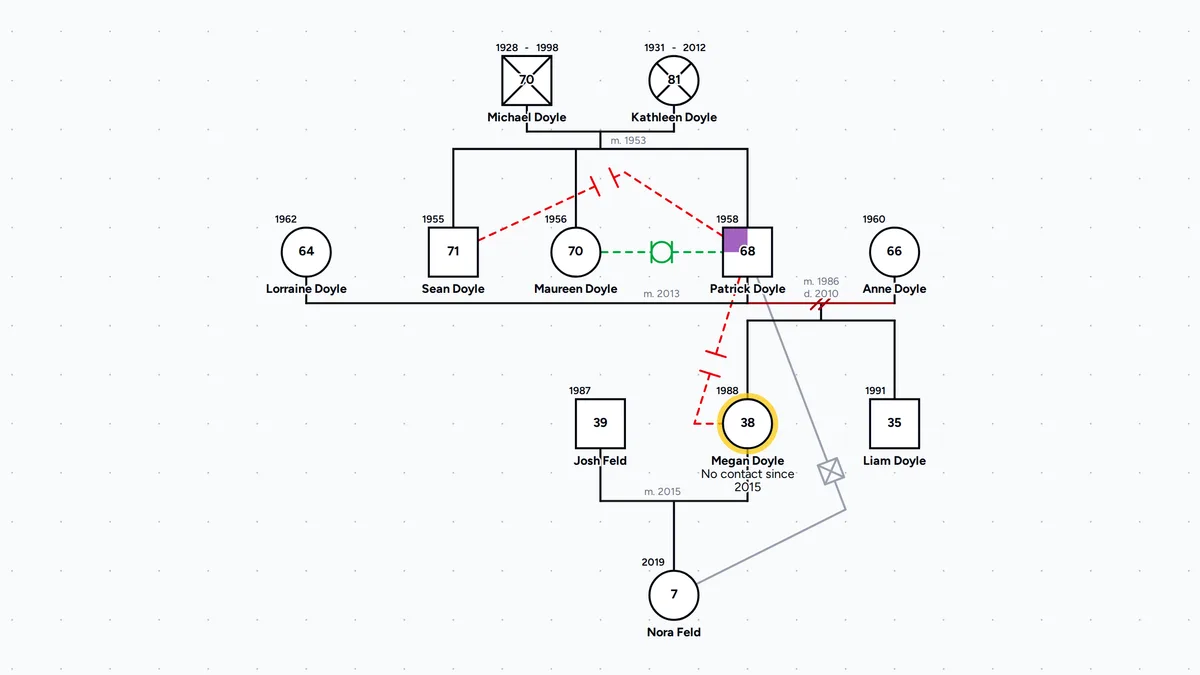 Emotional cutoff genogram exampleHow to draw a cutoff, a repaired cutoff and a never-met line across four generations.
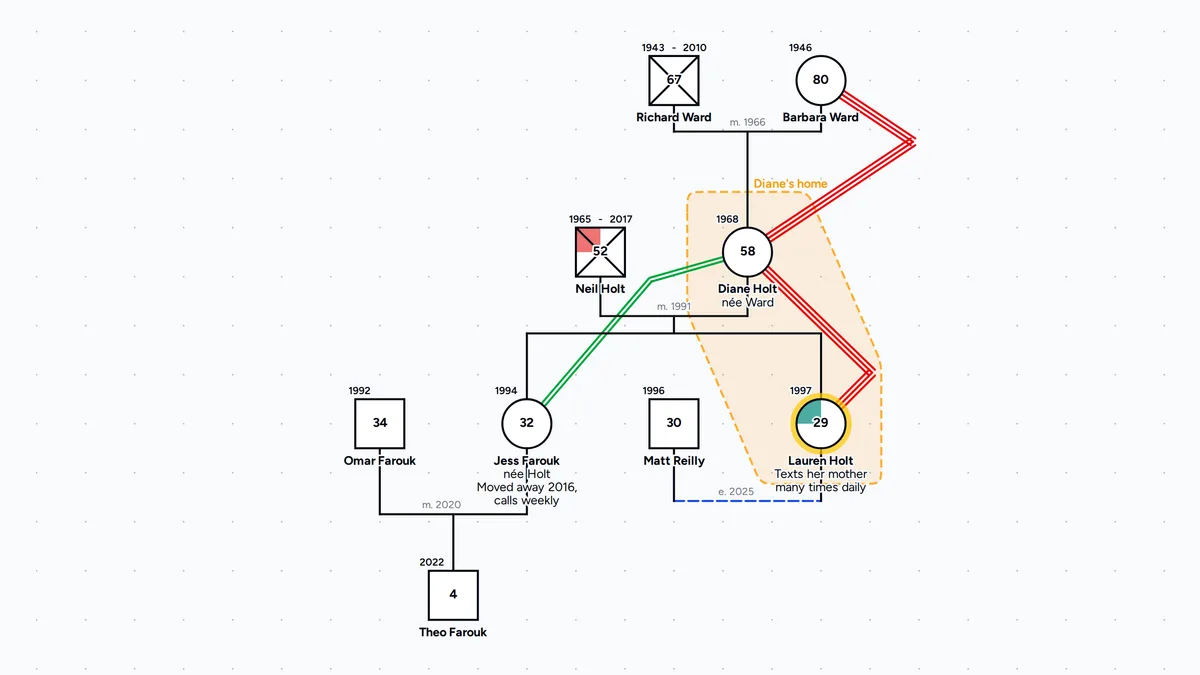 Enmeshed family genogram exampleHow to draw fusion and closeness between one mother and her two daughters, with the same fused line one generation up.
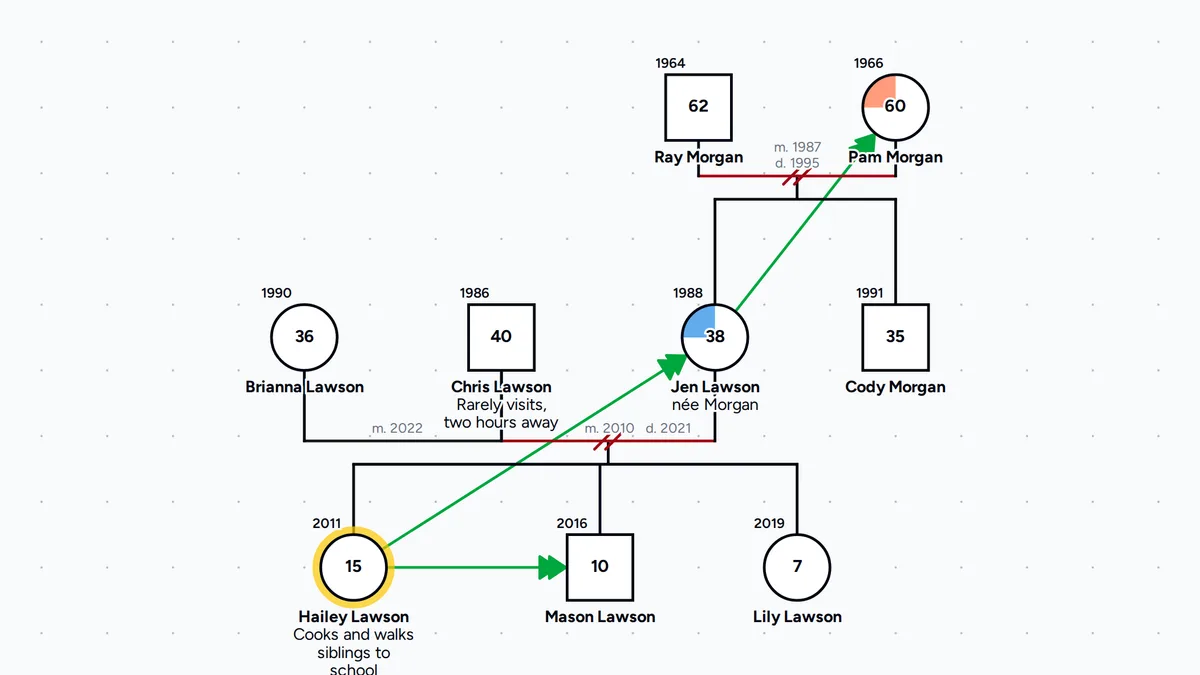 Parentification genogram exampleHow to draw caretaker lines from a parentified child to her mother and brother, with the same role one generation up.
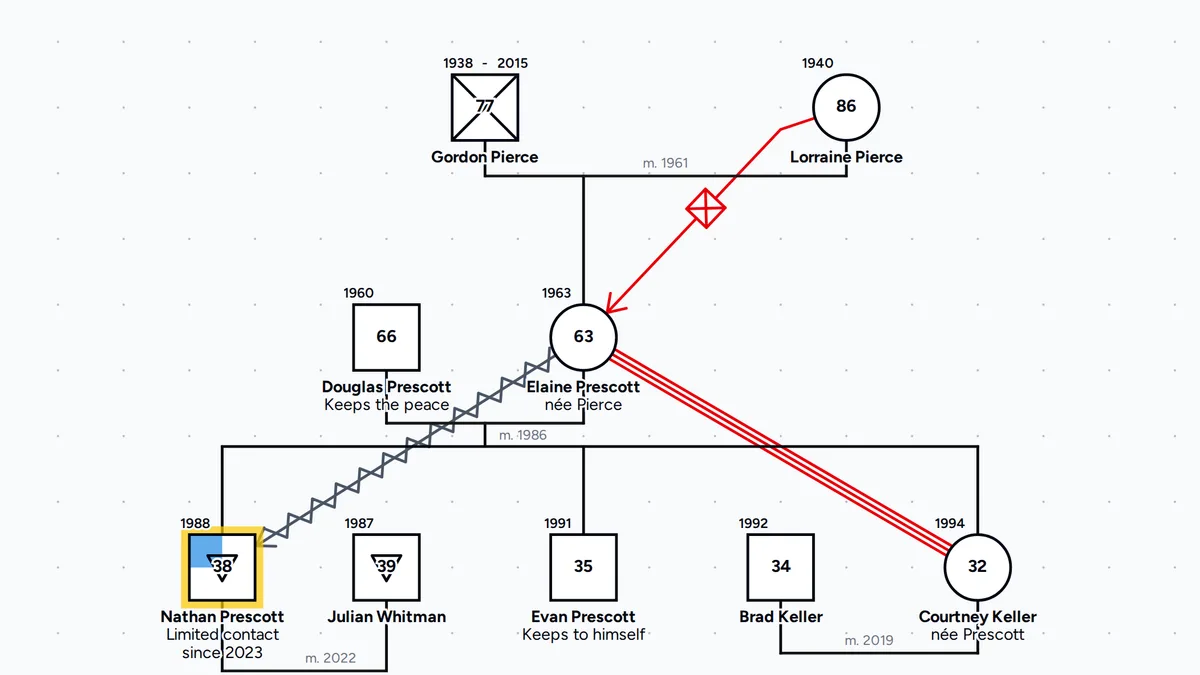 Narcissistic family roles genogram exampleHow to draw a favored child and a scapegoat with lines from their mother, and her own mother's control one generation up.
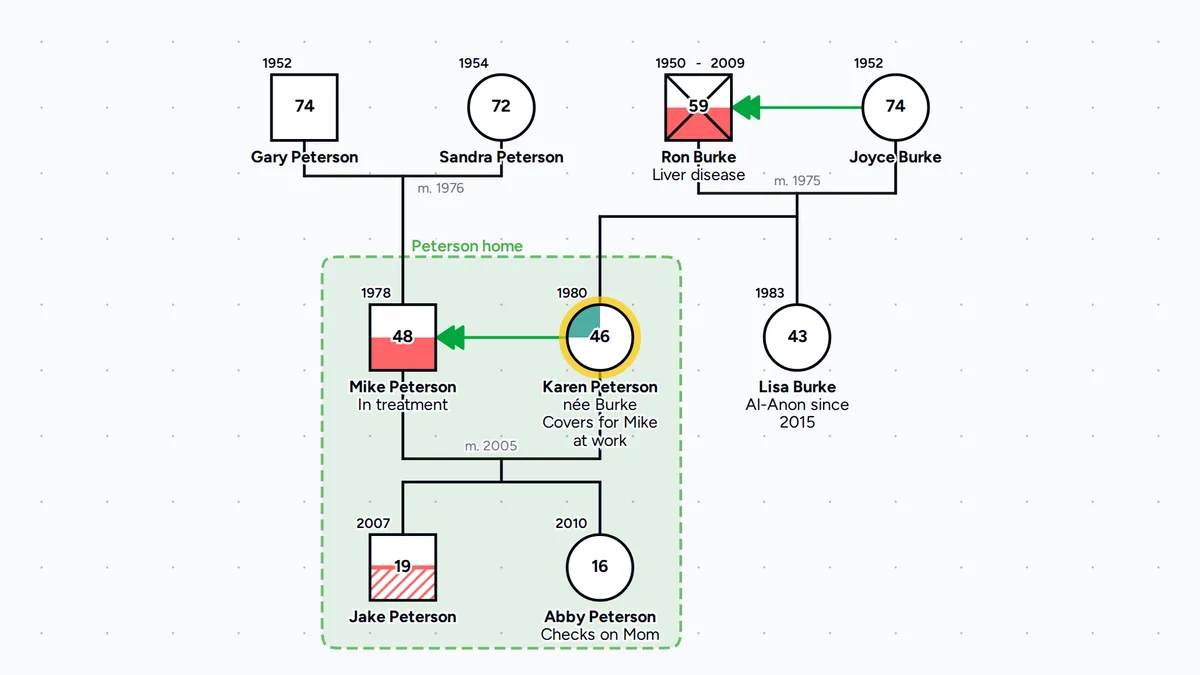 Codependency genogram exampleHow to draw caretaker lines and substance use fills when a wife covers for her husband's drinking as her mother did.
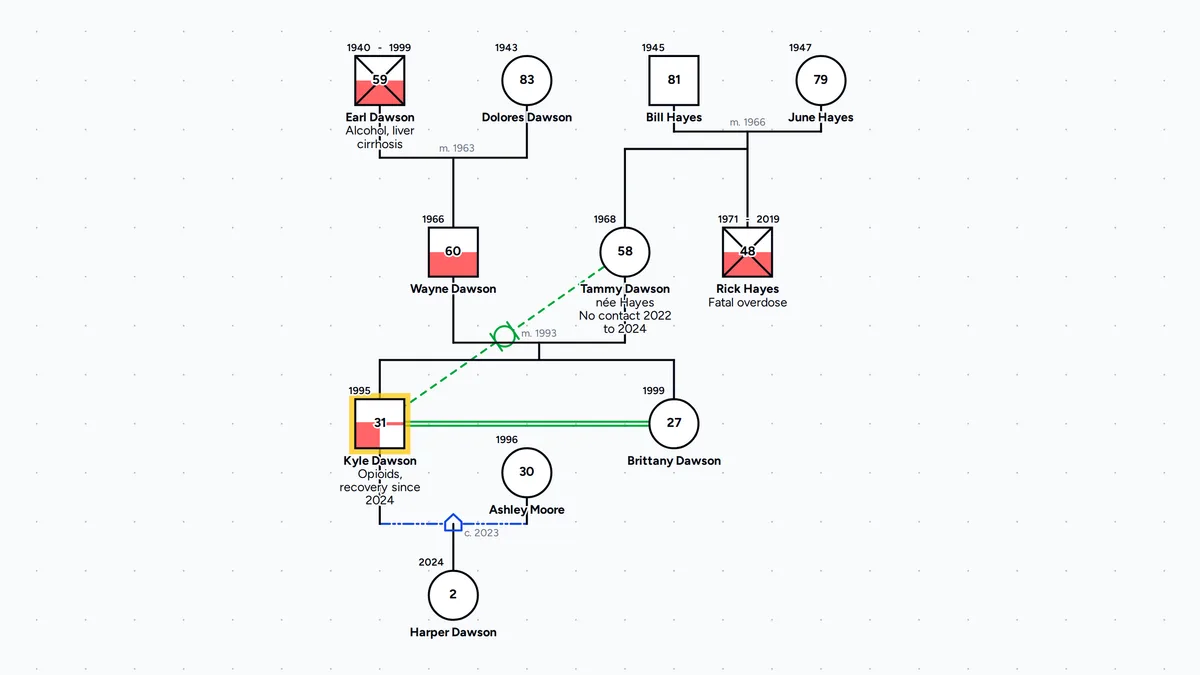 Substance abuse genogram exampleHow to draw substance use, a fatal overdose and recovery across three generations of one family.
Family structure genogram examples
These examples show how divorce, remarriage, separation, death and a household shared by three generations are drawn.
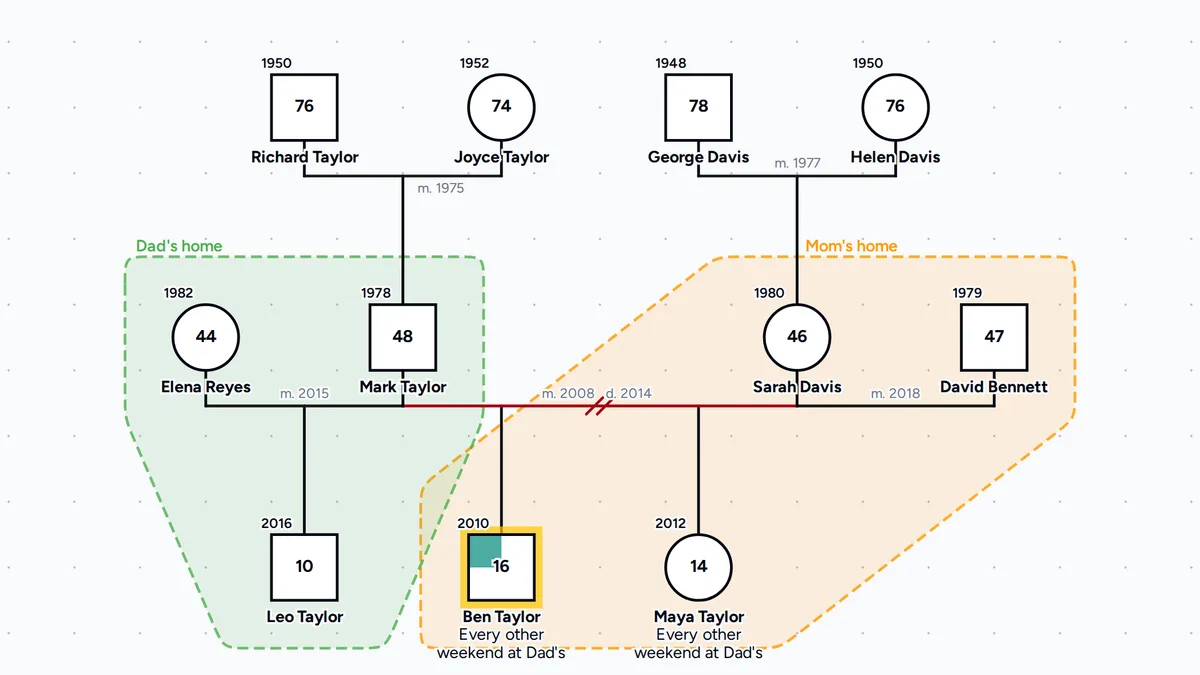 Divorce and remarriage genogram exampleHow to draw a divorce, both parents' remarriages, a half-brother and the children's two homes.
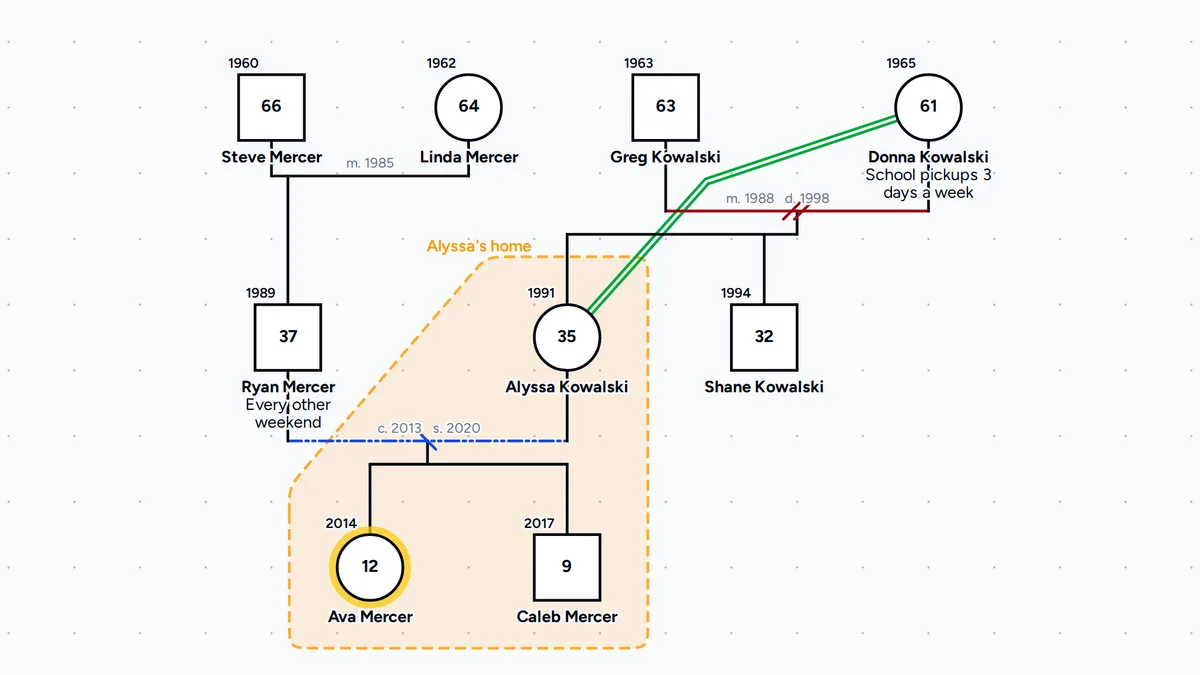 Single parent family genogram exampleHow to draw unmarried parents who separated, the children's household and the grandparent who helps.
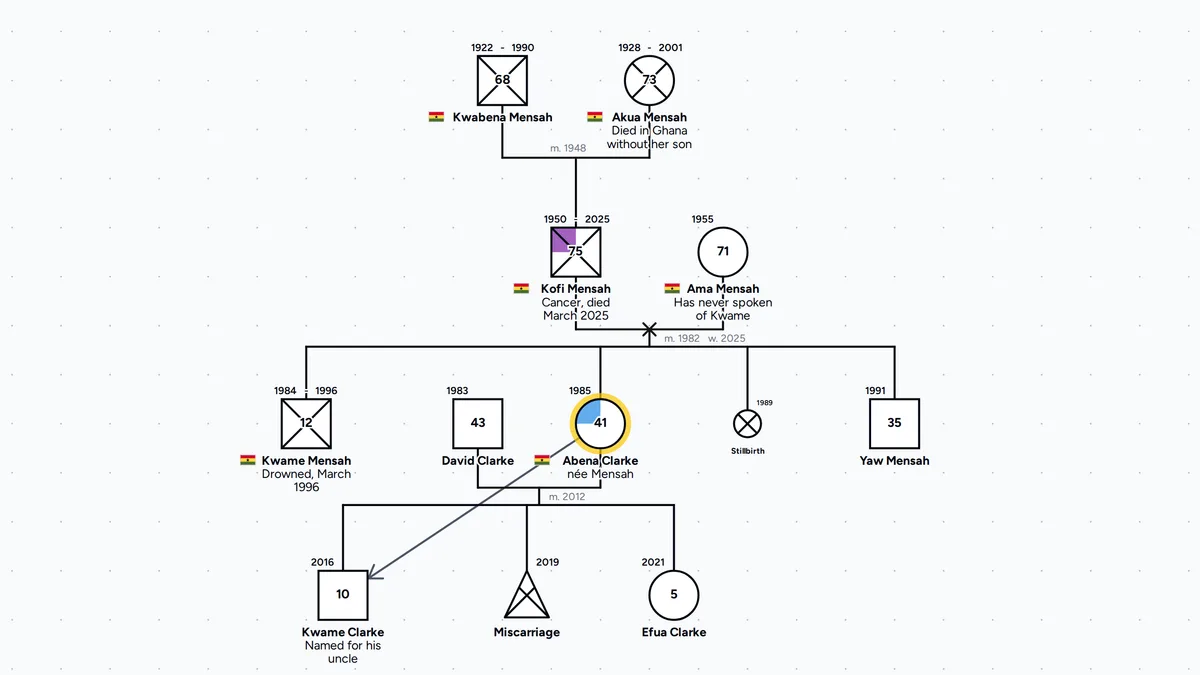 Grief and loss genogram exampleHow to draw deaths, a stillbirth, a miscarriage and a widowed line, and spot anniversaries across four generations.
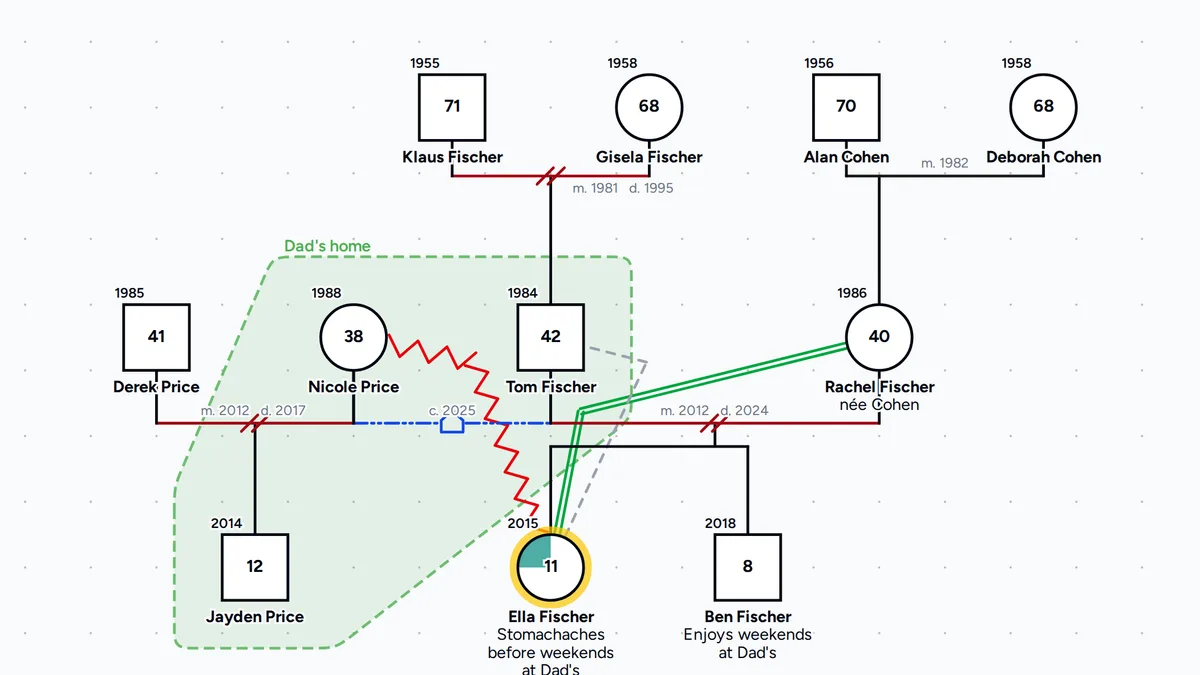 Divorce genogram from the child's viewHow to draw a divorce from the child's side, with the home the child visits and the child's line to each adult in both homes.
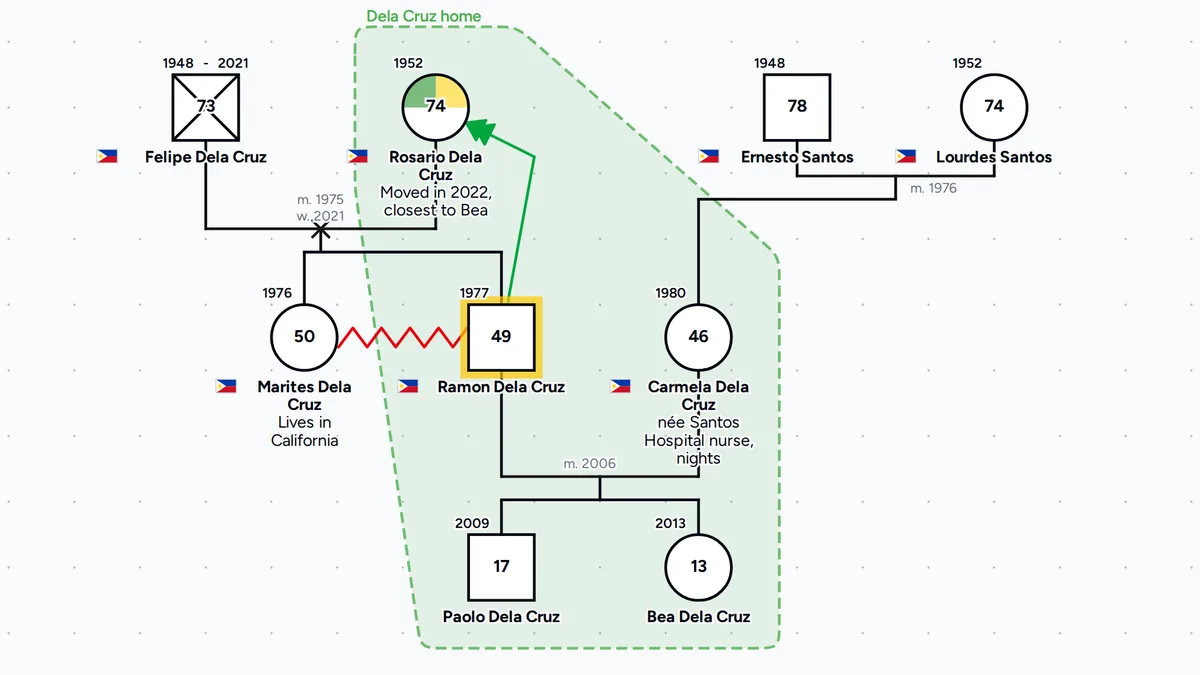 Multigenerational household genogram exampleHow to draw one household outline across three generations, with a sandwich-generation caregiver and a sibling who lives elsewhere.
Medical genogram examples
In these genograms, each health condition is drawn as a colored quadrant of the person's symbol, with a key to every color.
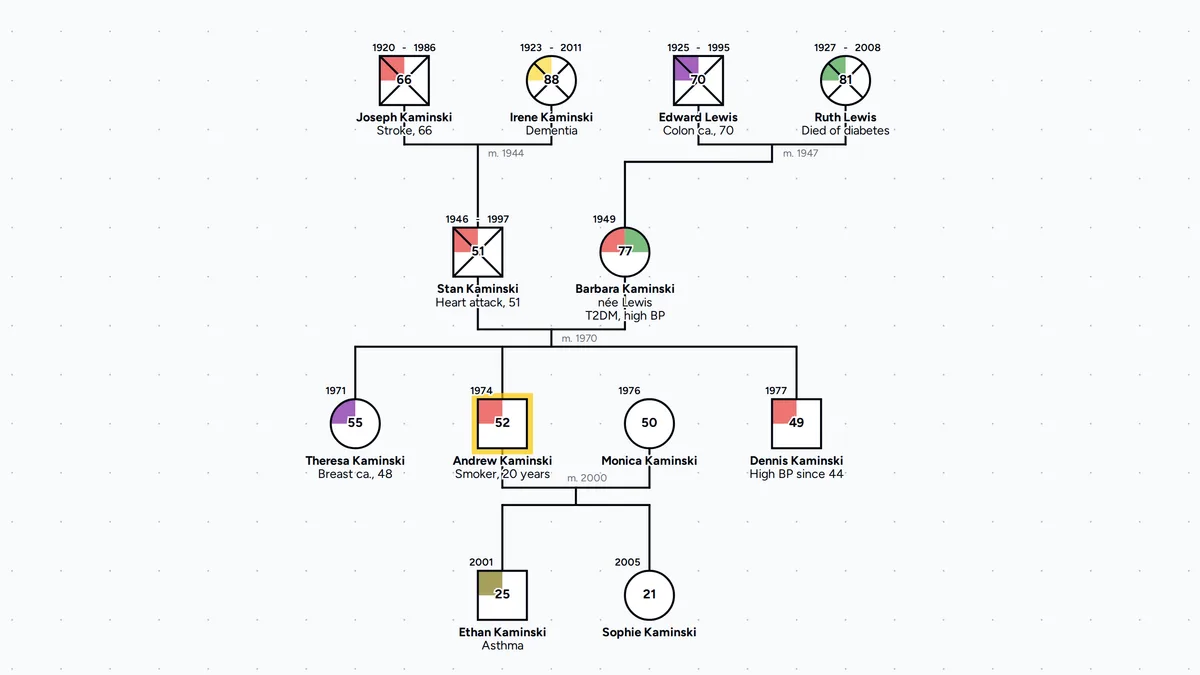 Nursing genogram exampleHow to draw heart disease, diabetes and cancer in the family health history of a patient admitted with chest pain.
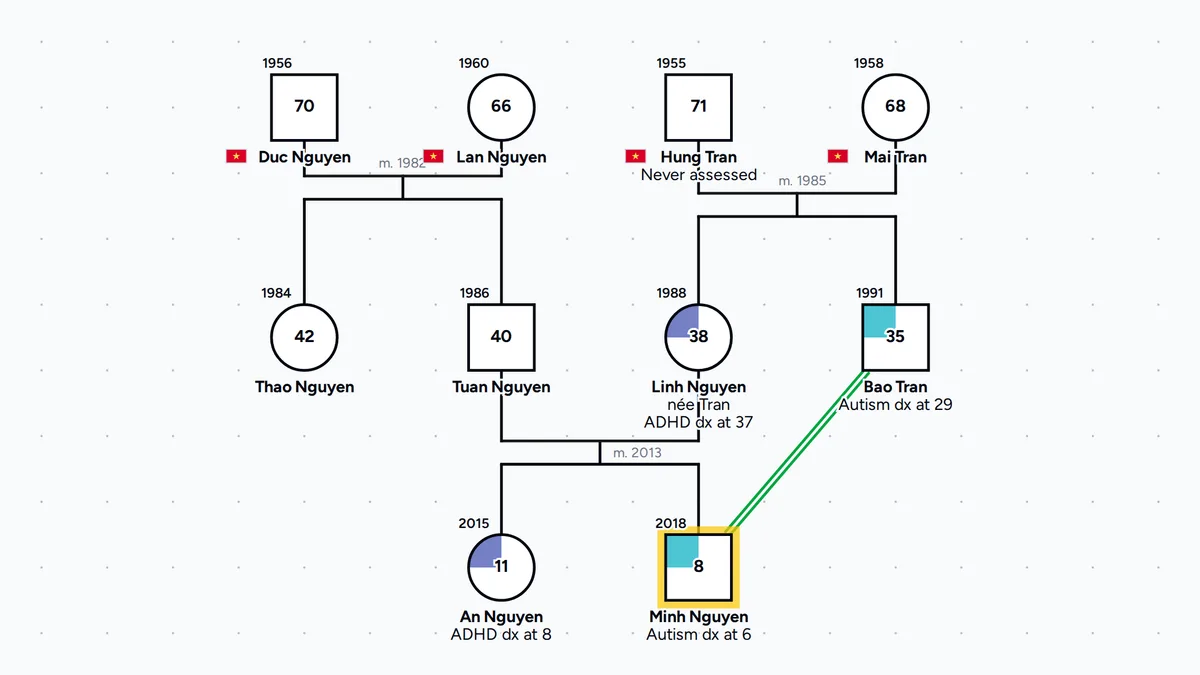 Neurodivergent family genogram exampleHow to draw autism and ADHD in two generations, with a grandfather labeled "Never assessed".
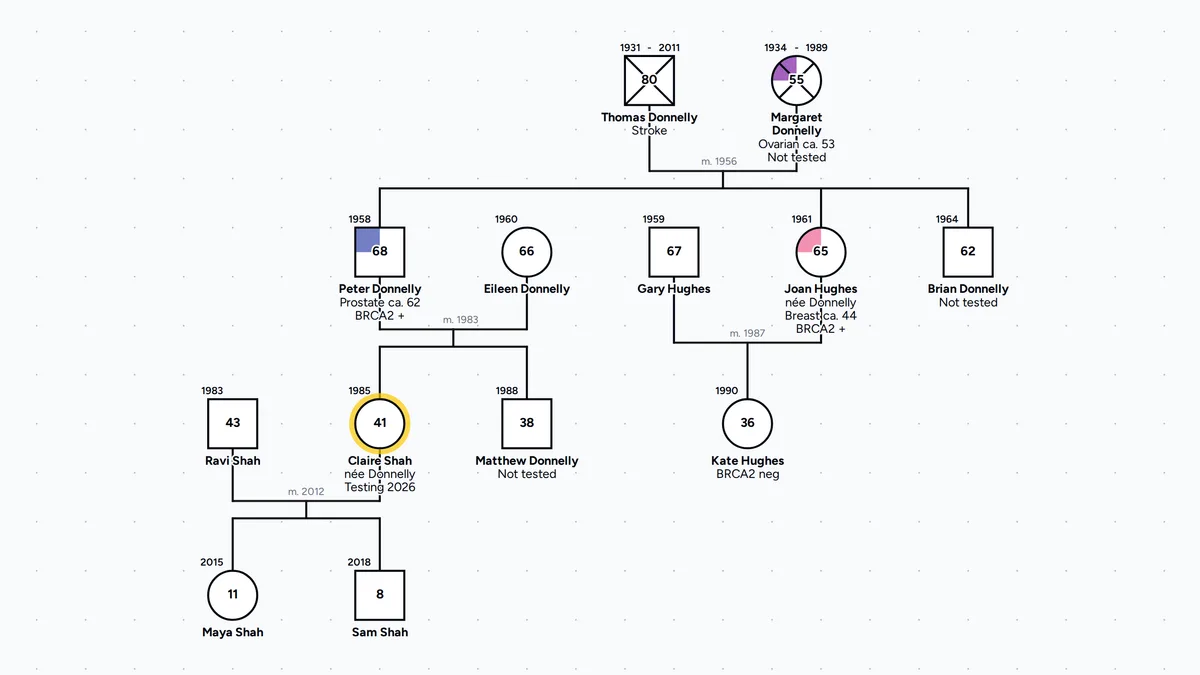 Medical genogram example: hereditary cancerHow to draw three cancers in two generations, the age at each diagnosis and the BRCA2 test results.
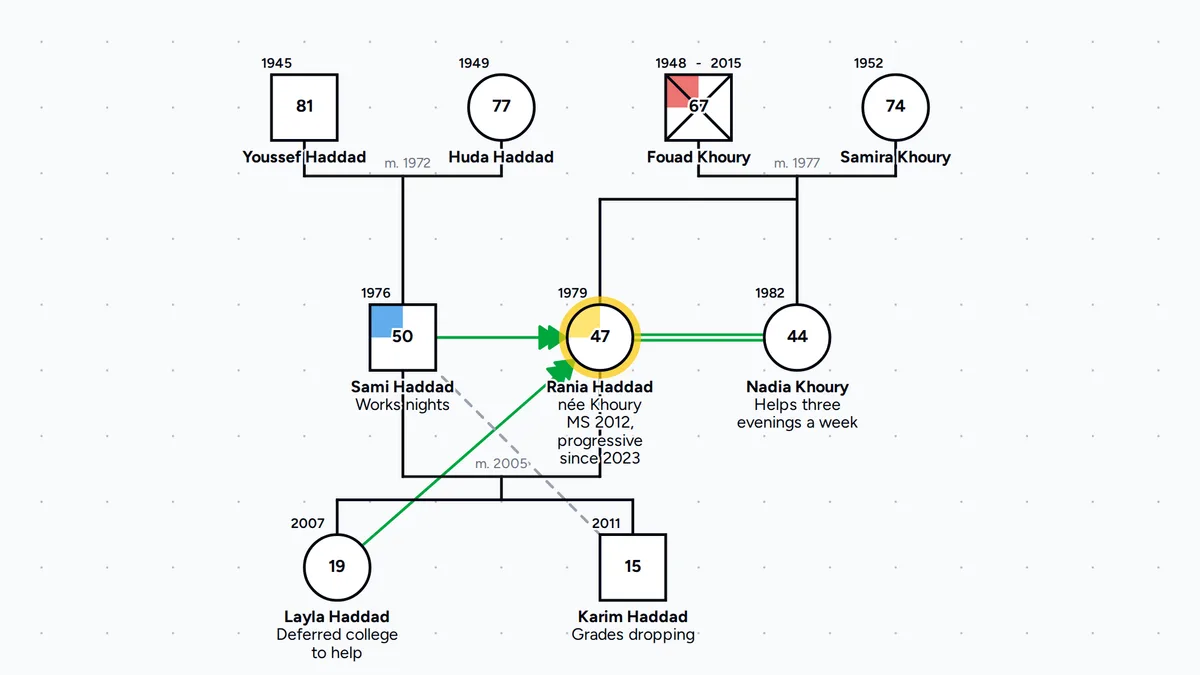 Chronic illness family genogram exampleHow to draw caretaker lines to an ill person, record the diagnosis year and course of a chronic illness and show a caregiver's own condition.
Start from a blank template
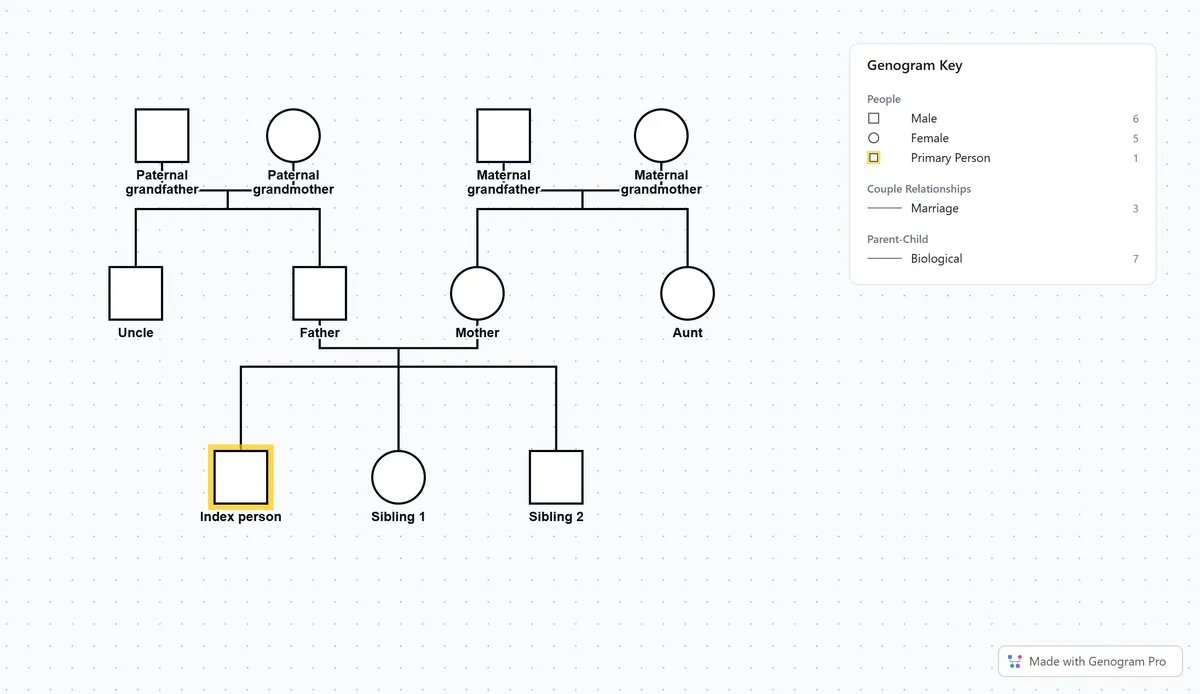
Blank 3 generation template
Grandparents, parents and siblings with role labels
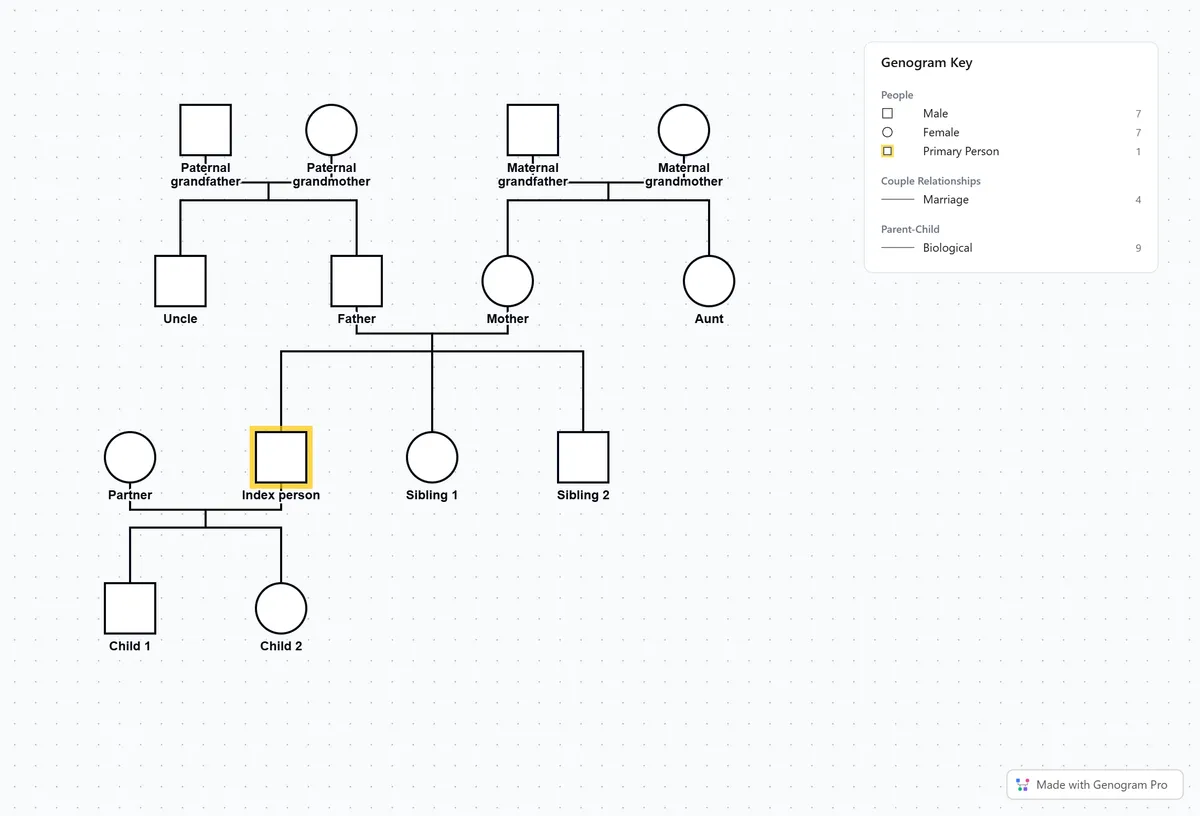
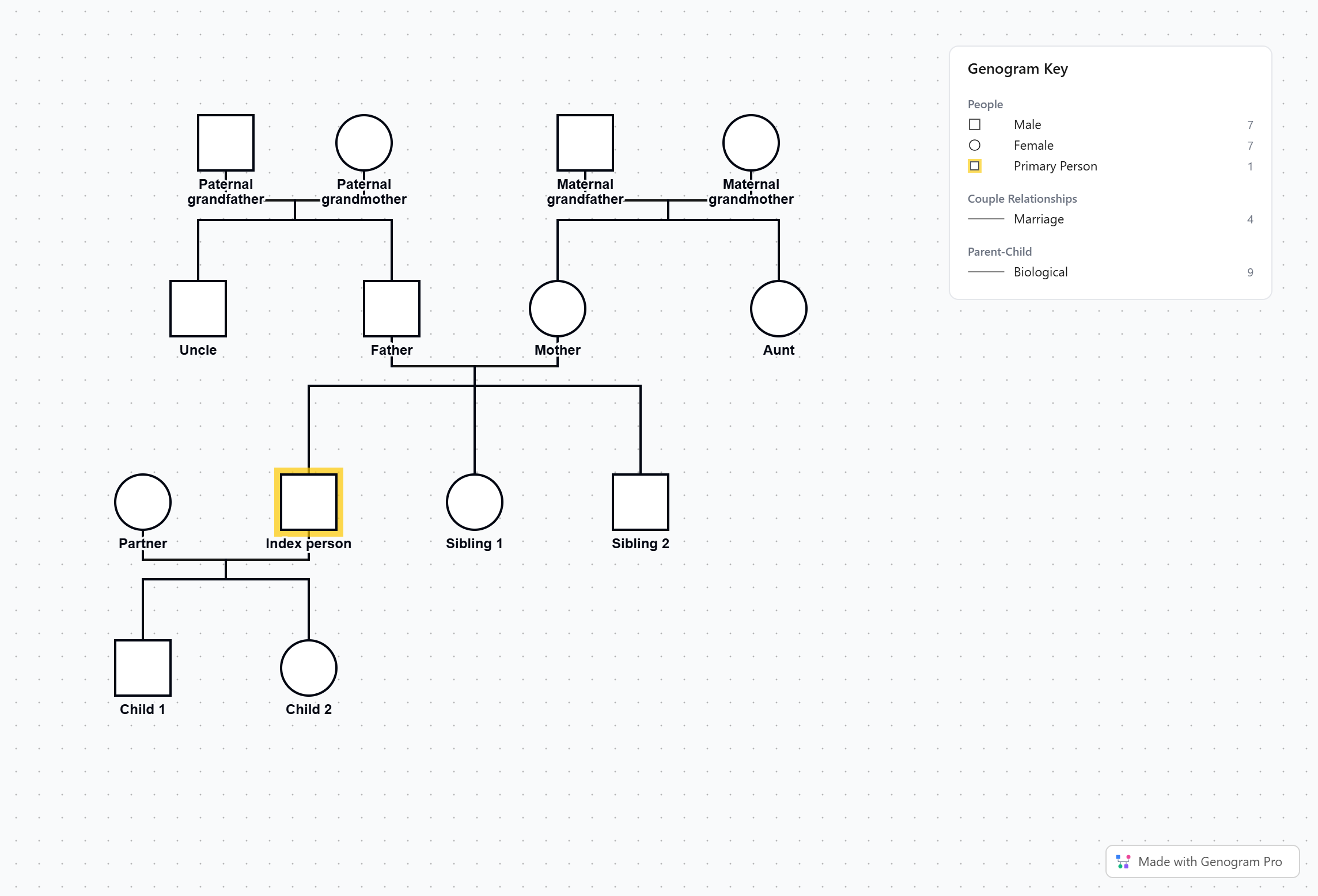
Own family template
The same three generations with your partner and children
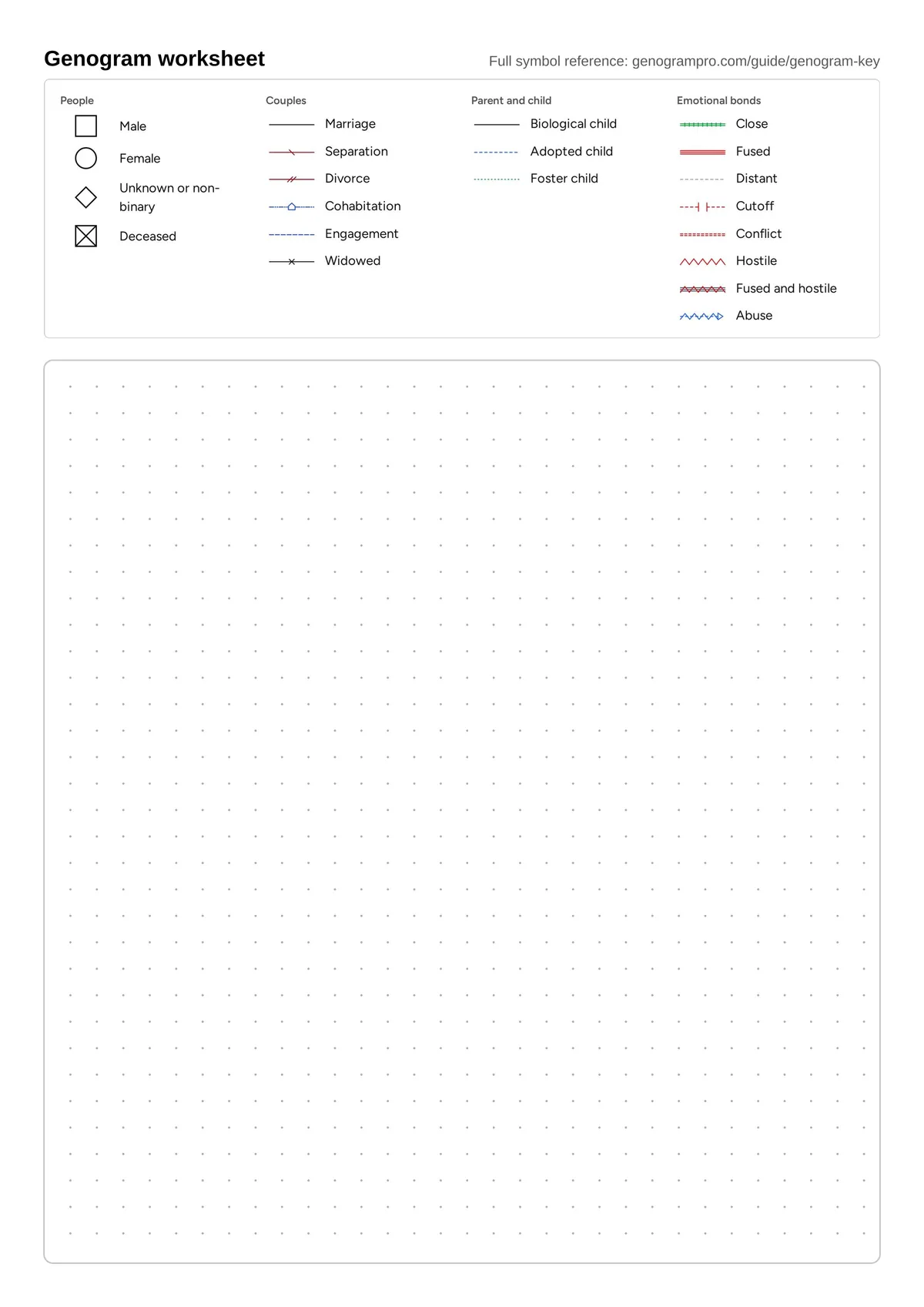
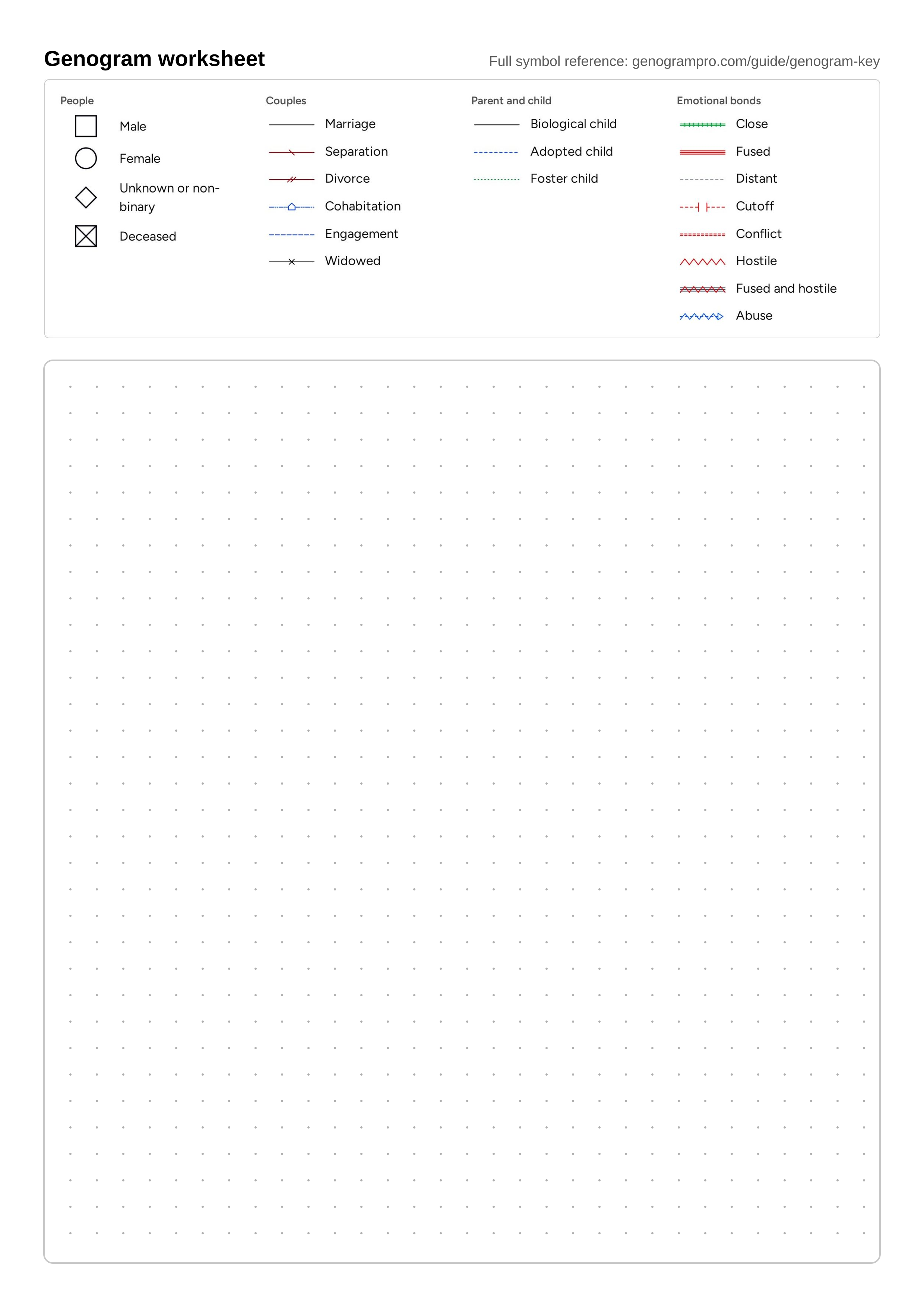
Genogram worksheet
A symbol key and a dotted grid for drawing by hand
Questions people ask
Read how to make a genogramWhat are the different types of genograms?
Genograms differ by what they are drawn to show, and the examples here are grouped into four types. A simple genogram has three or four generations of one family drawn with the core symbols, and a family therapy genogram is drawn to show emotional patterns such as cutoff, fusion and conflict. A family structure genogram shows how a family is arranged after a divorce, remarriage, separation or death, or in a shared household, and a medical genogram has the health conditions of each relative, with the age or year of each diagnosis.
What is the main purpose of a genogram?
The purpose of a genogram is to put a family's structure, relationships and health history across at least three generations into one diagram, where patterns that repeat from one generation to the next are easier to see. Therapists use genograms to understand a client's family, social workers use them in assessments, and nurses and physicians use them to judge hereditary health risk.
How do you do a genogram for social work?
Start with the client and everyone in their household, then add their parents, siblings and grandparents so that there are at least three generations. Mark deaths, divorces and who lives with whom, then add the relationships, substance use and health conditions that matter to the assessment. Social workers often draw the genogram with the client during intake and attach an exported PDF to the case file.
Social work genogram exampleHow do you show adoption on a genogram?
Draw an adopted child with a dashed child line and a foster child with a dotted one, so that a reader can tell a permanent adoption from a foster placement. The labeled genogram example in the first group has both, with an adopted daughter and a foster son.
Adoption genogram symbolWhat is the best tool to create a genogram?
A dedicated genogram editor is quicker than a general diagram tool, because the standard symbols and lines are built in and each new relative is connected for you. With the free genogram maker on this site, you need no signup, your genograms are saved in this browser and you can export a PNG or PDF with a key. Genogram Pro, the paid version with a 7-day free trial, saves them to an encrypted account, so you can open them on any device.
How do you create a genogram?
Start with the person the genogram is about, add their parents and siblings, then add both sets of grandparents. Join each couple with a line and draw their children below it in birth order, oldest on the left. Add deaths, divorces, health conditions and relationship lines next, and finish with a key so that readers can match each symbol and color.
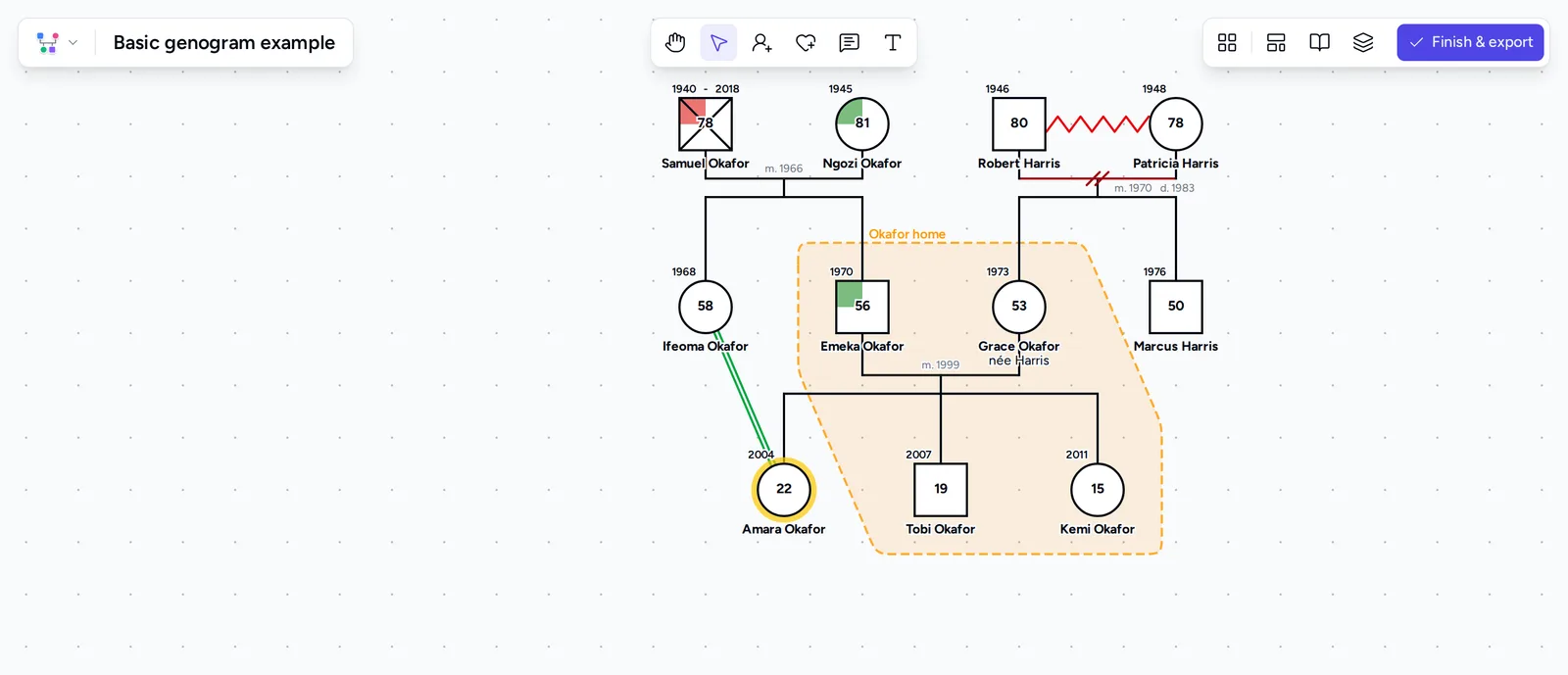
Start your genogram from the basic example
Open it in the editor, swap in your own names and dates, and export it as a PNG or PDF.