
Genograms in marriage and family therapy
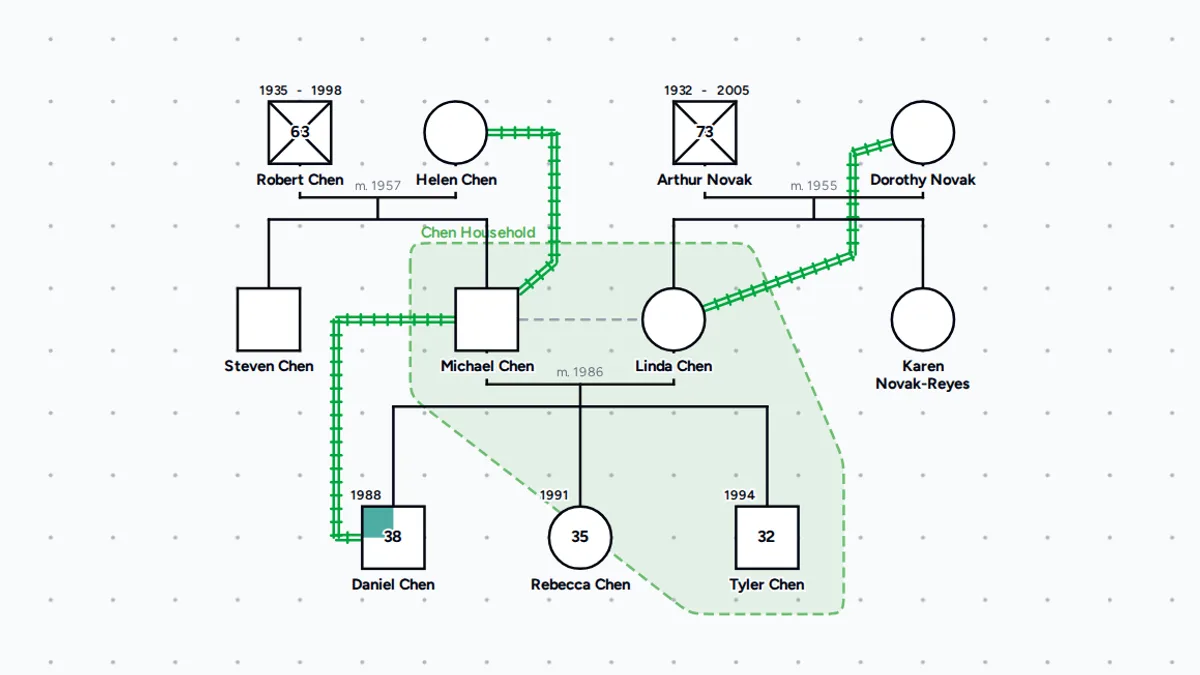
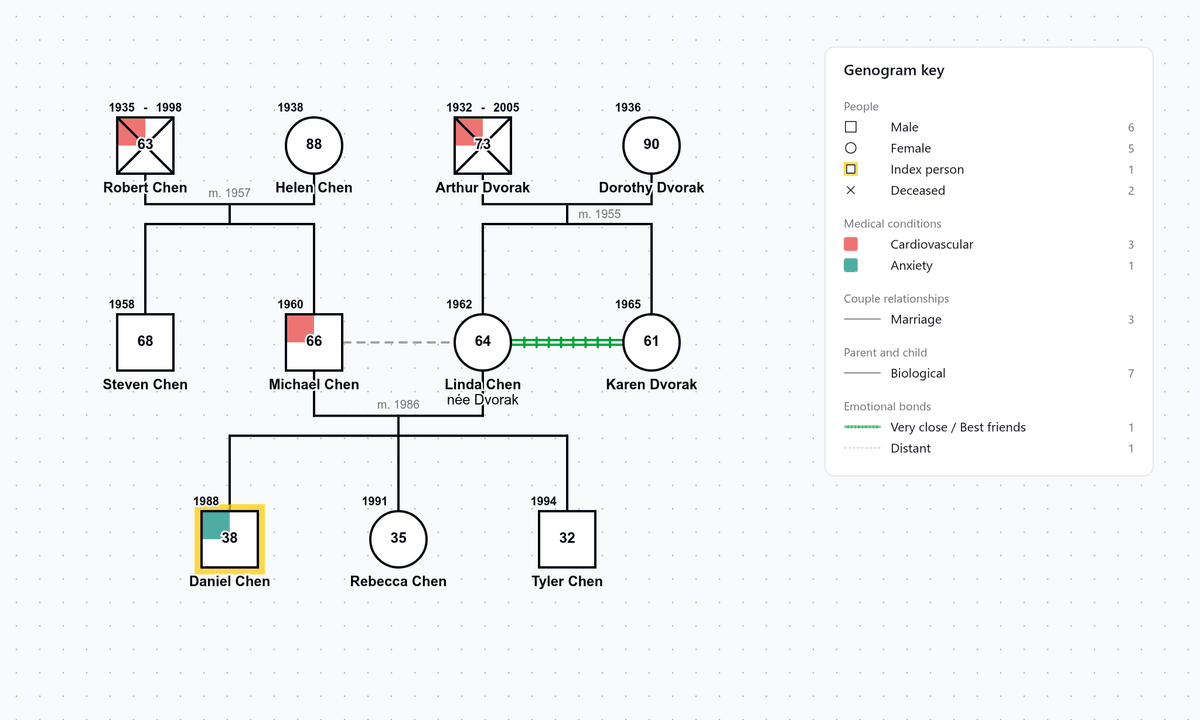
This page shows a family therapy genogram of the Chen family, three generations around Daniel Chen, 38, with a distant line between his parents, a very close line between his mother and her sister, and cardiovascular disease on both sides of the family. How a genogram is drawn in session and shared for supervision is described after it, with two common mistakes.
Updated October 2026Based on McGoldrick et al., Genograms: Assessment and Treatment (4th ed., 2020)
Cite this diagram
Genogram Pro. (2026, October 23). Genograms in marriage and family therapy [Diagram]. https://genogrampro.com/genogram-for-marriage-and-family-therapy-students
Used by students at
- University College London
- Montclair State University
- Boston College
- Lancaster University
- Louisiana State University
- NC State University
- San Diego State University
- University of Hawaii
- Indiana University
Grandparents on both sides
Robert and Helen Chen and Arthur and Dorothy Dvorak are on the top row, and Robert, who died in 1998, and Arthur, who died in 2005, each have an X.
Distance in the parents' marriage
Daniel's parents Michael and Linda, married in 1986, are drawn with a gray dashed distant line.
A very close tie
Linda and her younger sister Karen are drawn with a green very close line.
Cardiovascular disease in two generations
Daniel's grandfathers Robert and Arthur and his father Michael each have a red cardiovascular quarter.
Index person
Daniel, the index person, has a yellow outline and a teal anxiety quarter, with his younger sister Rebecca and brother Tyler to his right.
What a genogram shows in family therapy
In marriage and family therapy, a genogram is drawn with the client over at least three generations, in standard genogram symbols, to see the family's structure, how close or distant people are and what repeats from one generation to the next. The therapist and the client then have one picture of the family to return to in later sessions. How therapists use a genogram in practice is described in the guide to genograms in therapy.
The Chen genogram is drawn for Daniel Chen, the index person, who has anxiety. The same family is drawn step by step in the 3 generation genogram example.
Drawing a genogram in session
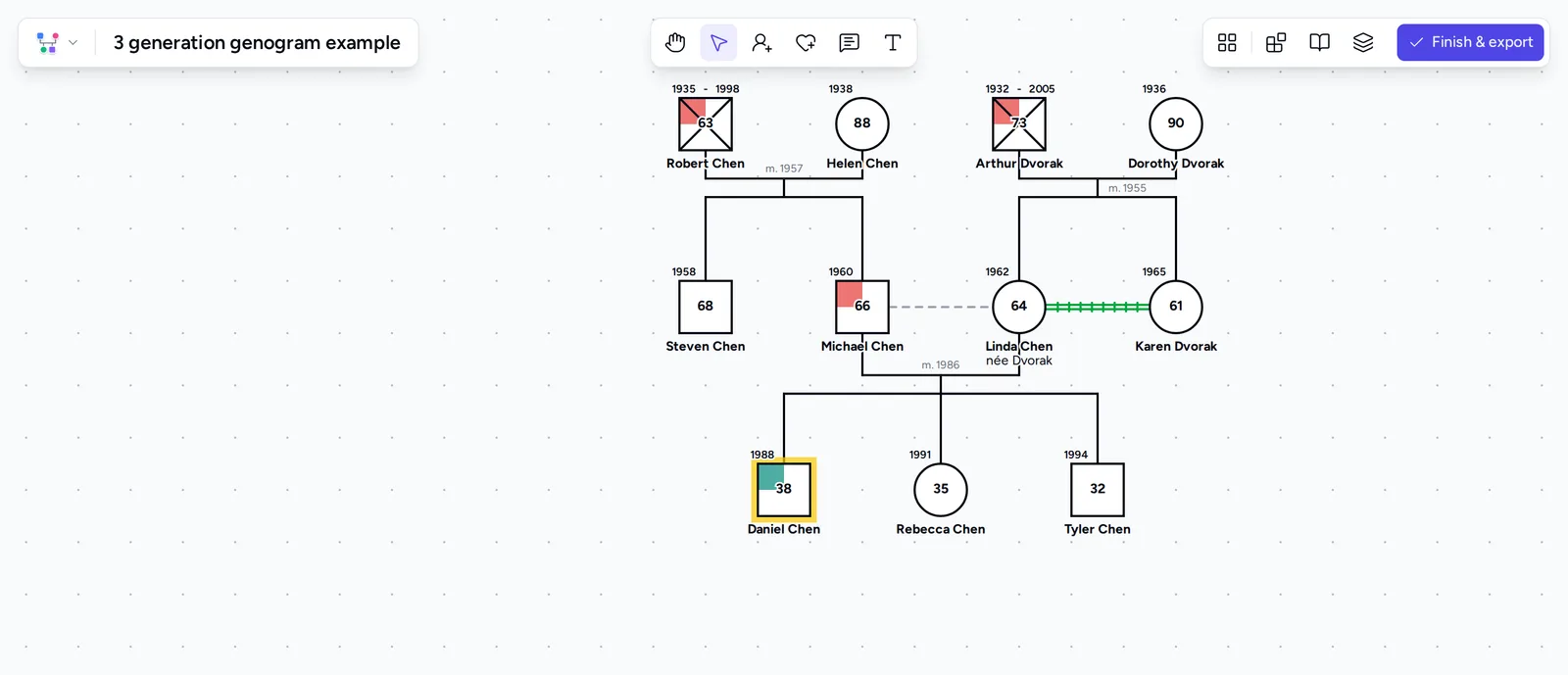
In the editor, each parent, partner or child is added from the toolbar in one click, and each generation is lined up with auto-arrange, so the genogram can be drawn while the client talks. With the Professional plan or its 7-day trial, a first version can also be drafted by the AI assistant from a few sentences about the family, for you to check with the client.
The questions to ask about each generation are listed in the genogram questions guide, and a family shaped by a divorce and a second marriage is drawn in the divorce and remarriage genogram example.
Encrypting client data and sharing a genogram for supervision
With the Professional plan, genograms are encrypted in your browser before they are saved to your account, so only ciphertext is stored on the server and the family's details cannot be read there. To share a genogram with a supervisor, you can send a read-only link with a password, and the supervisor can open it without an account. How the encryption works is described on the HIPAA page.
For marriage and family therapy students
You can open the free genogram maker in the browser with nothing to install and no account. Your genogram is saved in that browser, and its PNG and PDF exports have a small Genogram Pro badge. The Professional plan is paid and has a 7-day trial, and students at participating schools can get it at no cost for a year. Sign up with your school email.
Two common mistakes
Draw how close the couple is
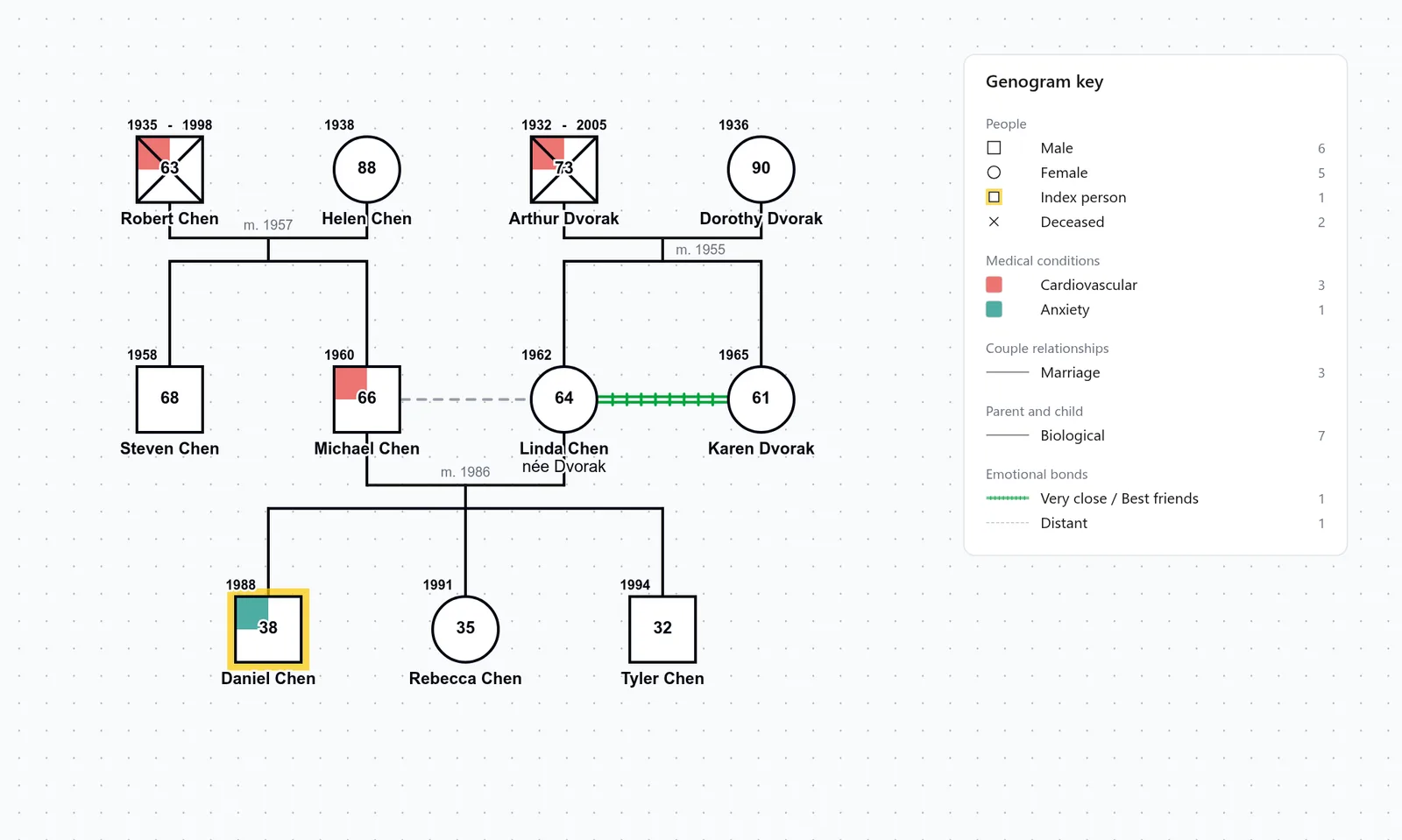
A marriage line means only that Michael and Linda married in 1986, so when the client describes the marriage, add a relationship line for how close or distant the two are.
Draw siblings in birth order
Siblings are drawn from the oldest on the left to the youngest on the right, so Daniel, born in 1988, is first, then Rebecca, born in 1991, and Tyler, born in 1994.
Adding relatives, lines and a key
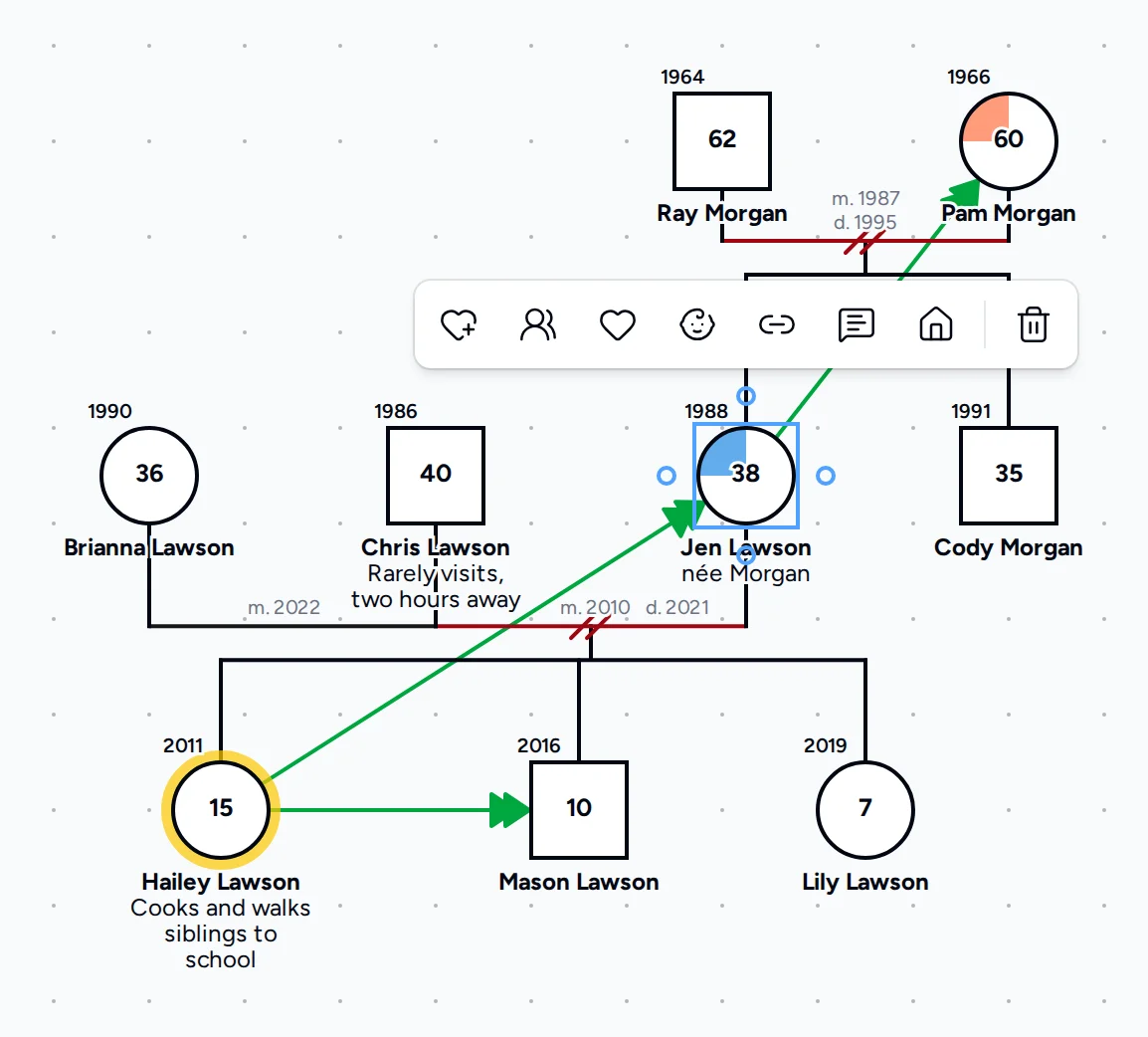
Select a person and add their parents, a partner or a child from the toolbar, with the connecting line already drawn, so you can add a whole generation in a few clicks.
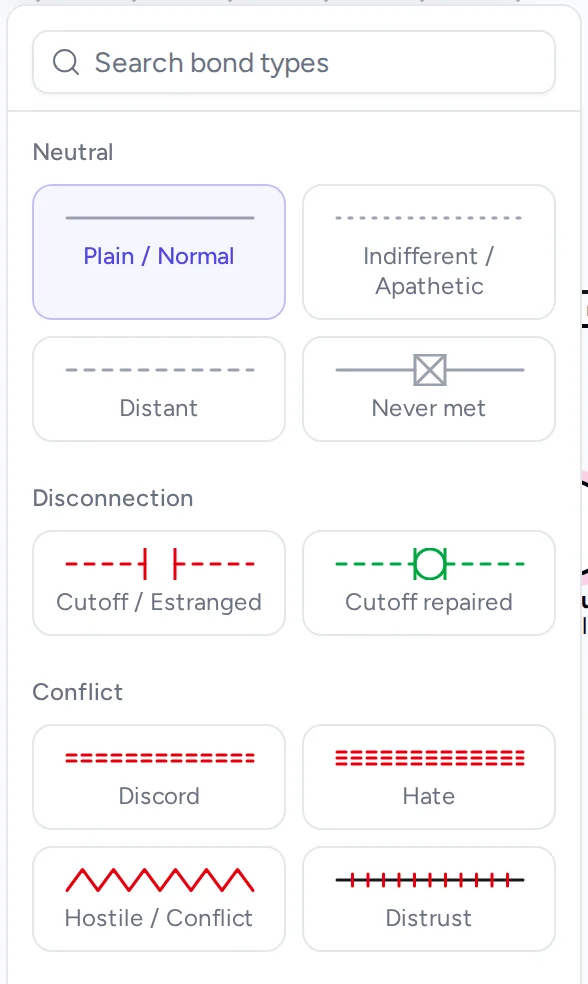
There are 39 relationship line types in groups such as Neutral, Disconnection and Conflict, and you can search the list by name for a distant, hostile or cutoff line.
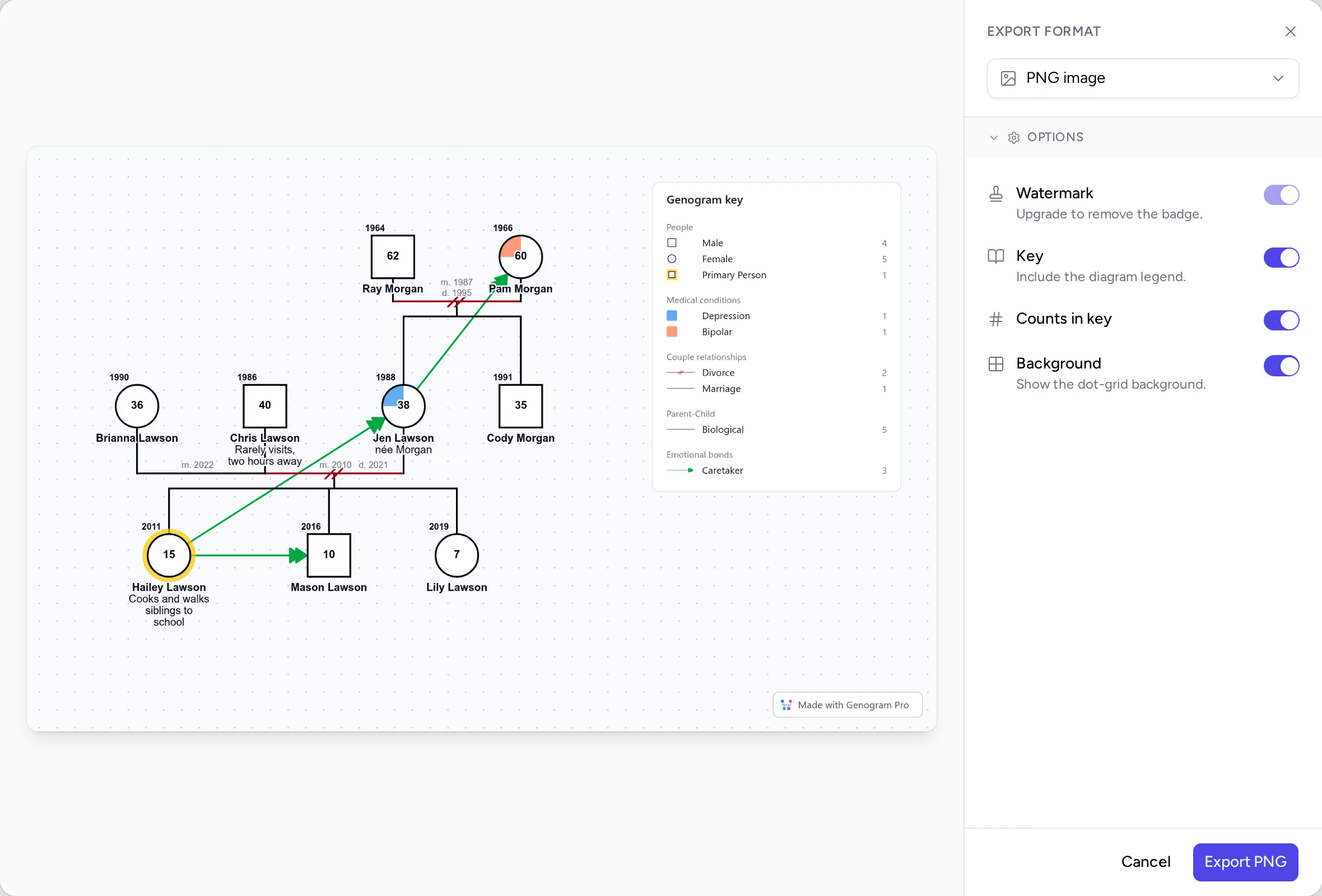
When you export a PNG or PDF for supervision, a key is added with only the symbols and lines on the genogram.
Questions people ask
How is a genogram used in marriage and family therapy?
A family therapist draws a genogram with the client over at least three generations and reads it for the family's structure, how close or distant people are and the patterns that repeat across generations, then returns to the same genogram in later sessions.
Genograms in therapyCan I build a genogram live in a session?
Yes. Add each relative from the toolbar as the client names them, and use auto-arrange to line up the generations. With the Professional plan or its 7-day trial, the family can also be drafted by the AI assistant from your session notes and then corrected with the client on the canvas.
Is client data encrypted?
Yes. With the Professional plan, genograms are encrypted in your browser before they are saved to your account. In the free genogram maker, a genogram is saved only in your browser.
HIPAA and encryptionCan I share a genogram with my supervisor?
With the Professional plan, you can send your supervisor a read-only link with a password, and your supervisor can open the genogram without an account. You can also export a PNG or PDF.
Is Genogram Pro free for MFT students?
The free genogram maker needs no account, and its PNG and PDF exports have a small Genogram Pro badge. The Professional plan is paid and has a 7-day trial, and students at participating schools can get it at no cost for a year. Sign up with your school email.
Start a family therapy genogram from the Chen family
Open it in the editor, swap in your own names and dates, and export it as a PNG or PDF.