
Genograms in nursing
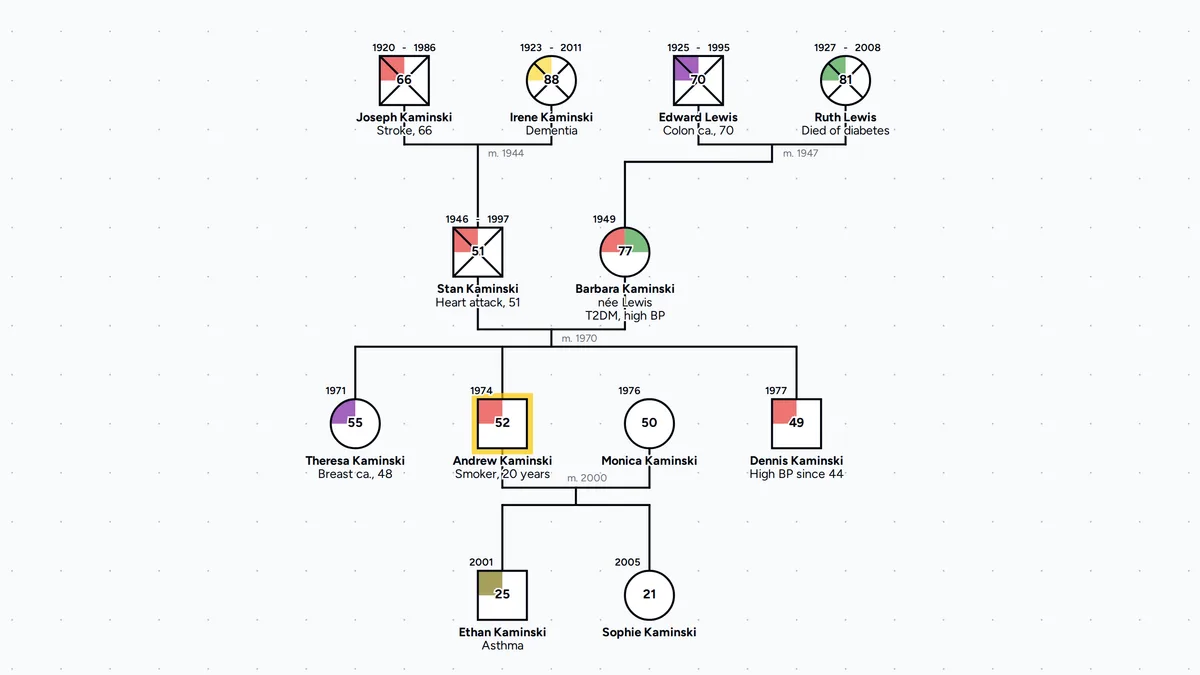
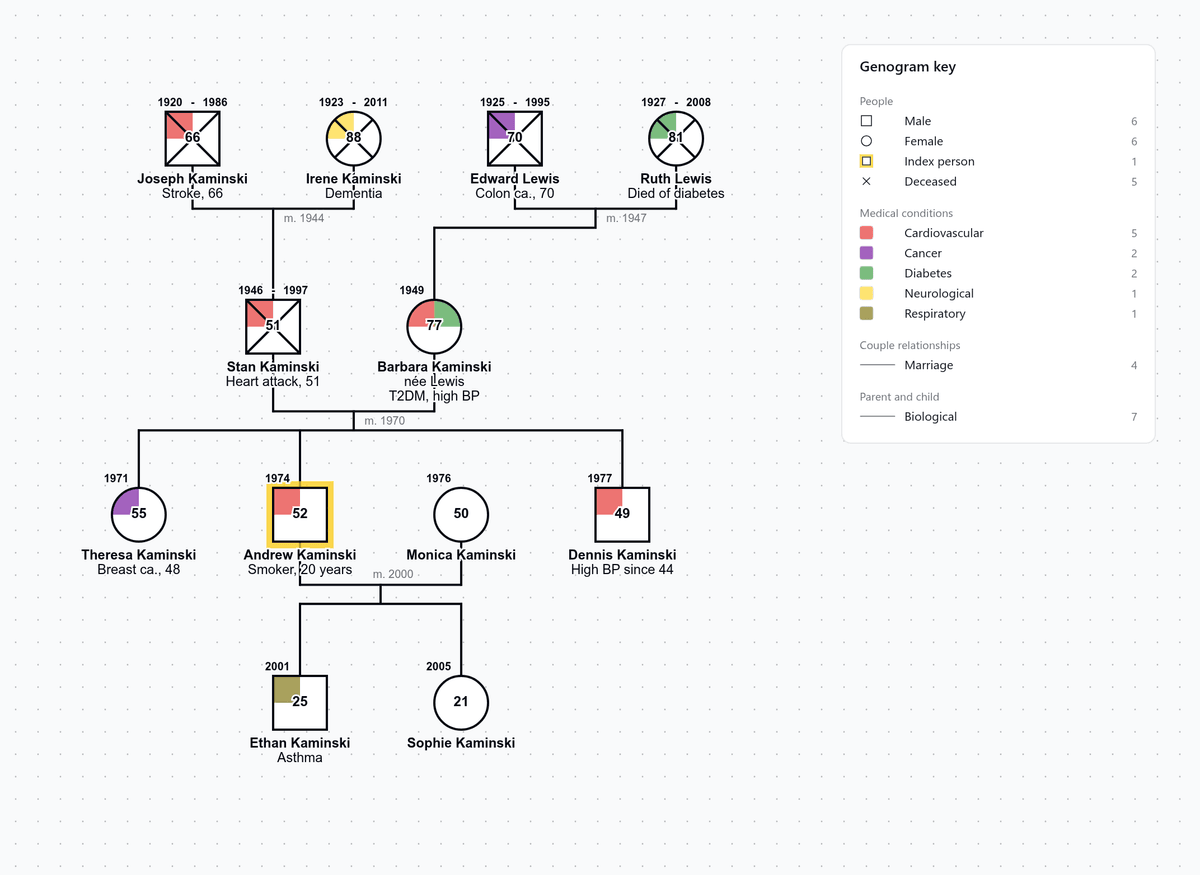
This page shows a nursing genogram of the family health history of Andrew Kaminski, 52, who was admitted with chest pain. Each relative's conditions and the age and cause of every death are drawn across four generations. The symbols for conditions and deaths, and two common mistakes, are shown after the genogram.
Updated October 2026Based on McGoldrick et al., Genograms: Assessment and Treatment (4th ed., 2020)
Cite this diagram
Genogram Pro. (2026, October 23). Genograms in nursing [Diagram]. https://genogrampro.com/genogram-for-nursing-students
Used by students at
- University College London
- Montclair State University
- Boston College
- Lancaster University
- Louisiana State University
- NC State University
- San Diego State University
- University of Hawaii
- Indiana University
Both sides of the family
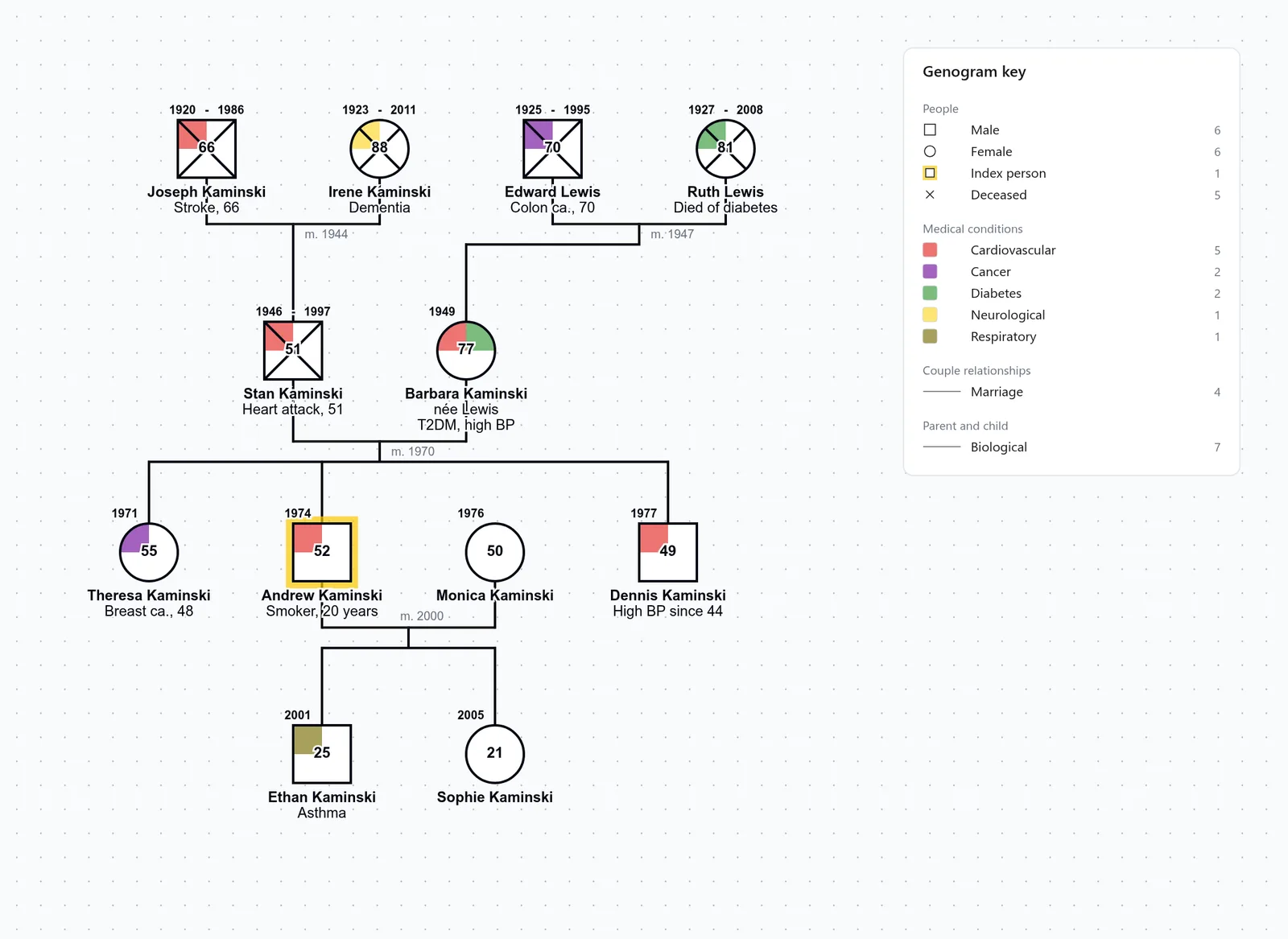
All four of Andrew's grandparents are drawn: Joseph and Irene Kaminski on his father's side and Edward and Ruth Lewis on his mother's.
Age and cause of death
Stan Kaminski's square has an X, the years 1946 and 1997 above it and the health note "Heart attack, 51" under his name.
Two conditions
Barbara Kaminski's circle has a red cardiovascular quarter and a green diabetes quarter, with the health note "T2DM, high BP".
The patient's risk factor
Andrew, the index person, has the health note "Smoker, 20 years", and his red quarter is for the chest pain he was admitted with.
Condition colors in the key
Each condition color is listed in the key with the number of people who have it, five for cardiovascular including Andrew, two each for cancer and diabetes, and one each for neurological and respiratory.
What to record on a nursing genogram
In nursing, a genogram is drawn as part of a family assessment, most often to record a family health history. In the OpenStax textbook Population Health for Nurses, a genogram is described as "a diagram showing birth and marriage relationships among family members, typically over at least three generations," with health conditions shown in colored shading, which "can help the nurse identify health conditions present in a client's family."
The Kaminski genogram is drawn for Andrew Kaminski, the index person. His father Stan died of a heart attack at 51, his grandfather Joseph died of a stroke at 66, his mother Barbara and her mother Ruth both developed diabetes, and his sister Theresa was diagnosed with breast cancer at 48. The guidelines behind the heart attack, diabetes and breast cancer findings, such as premature heart disease in a male relative before 55, are given on the nursing genogram example page.
The nurse records:
- each relative's health conditions, with the age at onset or diagnosis
- the age and cause of death for each relative who has died
- the patient's own risk factors, such as smoking
- the word "unknown" where the patient does not know a relative's history
The symbols for conditions and deaths
On a nursing genogram, each condition is drawn as a colored quarter of the person's symbol, and each color is listed in the key. A person who has died has an X through the symbol and the birth and death years above it, and the cause of death is written under the name. Condition fills are described in full in the medical genogram guide, and the X on the page about the deceased symbol.
One condition
A quarter of the symbol in the condition color, as for Dennis with high blood pressure.
Two conditions
Two quarters clockwise from the top left, as for Barbara with high blood pressure and diabetes.
Deceased
An X through the symbol, with the birth and death years above it.
Deceased with a condition
The X drawn over the condition color, as for Stan, who died of a heart attack at 51.
Cancer across two generations is drawn the same way in the hereditary cancer genogram example, and a family living with one long illness is drawn in the chronic illness genogram example.
For nursing students
You can open the free genogram maker in the browser with nothing to install and no account. Your genogram is saved in that browser, and its PNG and PDF exports have a small Genogram Pro badge.
The Professional plan is paid and has a 7-day trial. With it, your genograms are encrypted and saved to your account, exports have no badge, and a genogram can be drafted by the AI assistant from a paragraph of family history for you to check. Students at participating schools can get the Professional plan at no cost for a year. Sign up with your school email.
Two common mistakes
Name each condition color in a key
Without a key, a reader cannot tell which of Barbara's two colors is diabetes, so list every condition color on the genogram with the condition it stands for.
Write the age and cause of death
With only an X, a reader knows that Stan has died but not when or of what, and cannot see that his heart attack at 51 was premature. Write the years above the symbol and the cause of death with the age under the name.
Drawing a genogram for a health history
Pick a condition from the default list of 16, such as Cardiovascular, Cancer or Diabetes, or add your own, and a quarter of the person's symbol is filled in that condition's color.
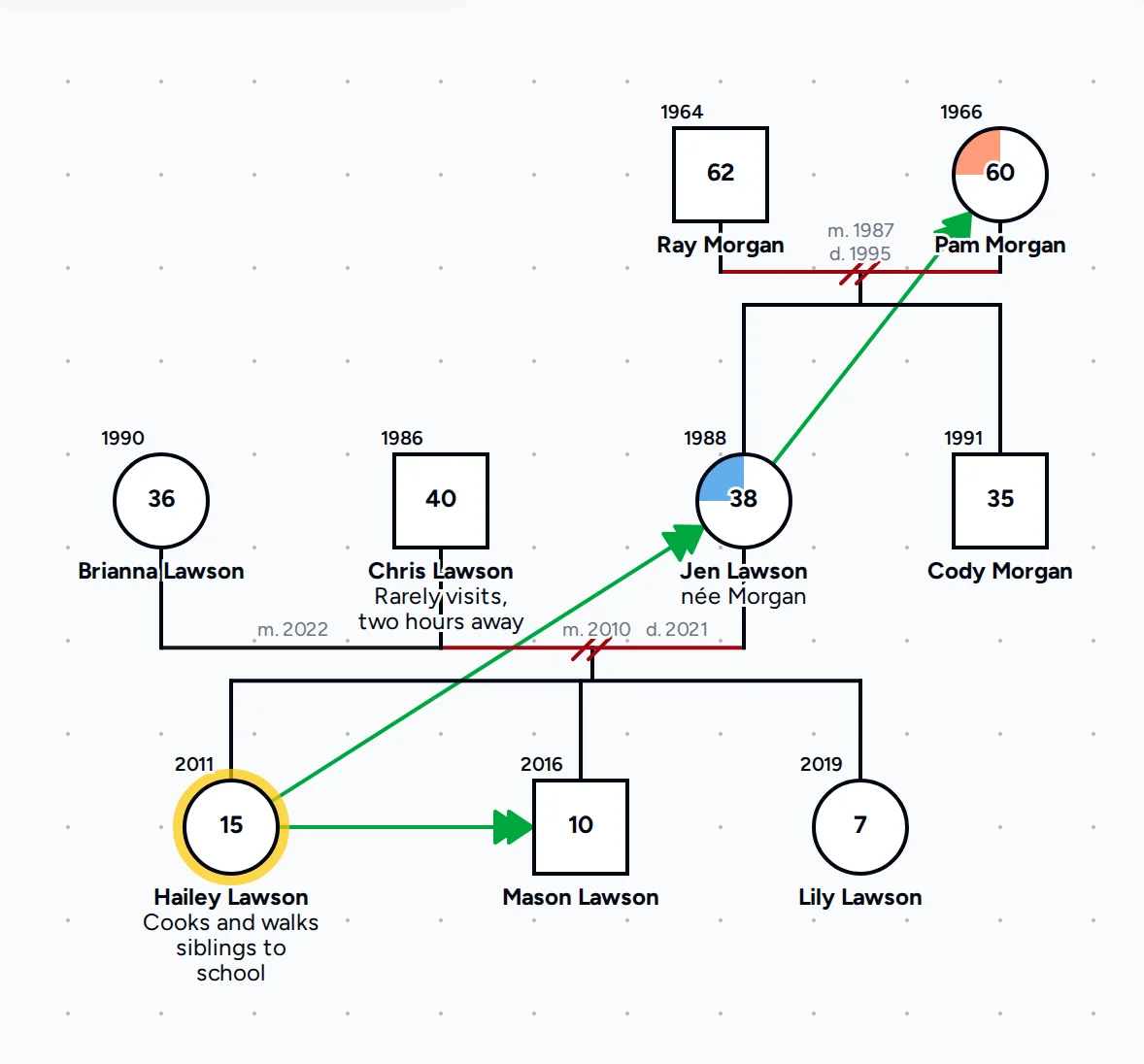
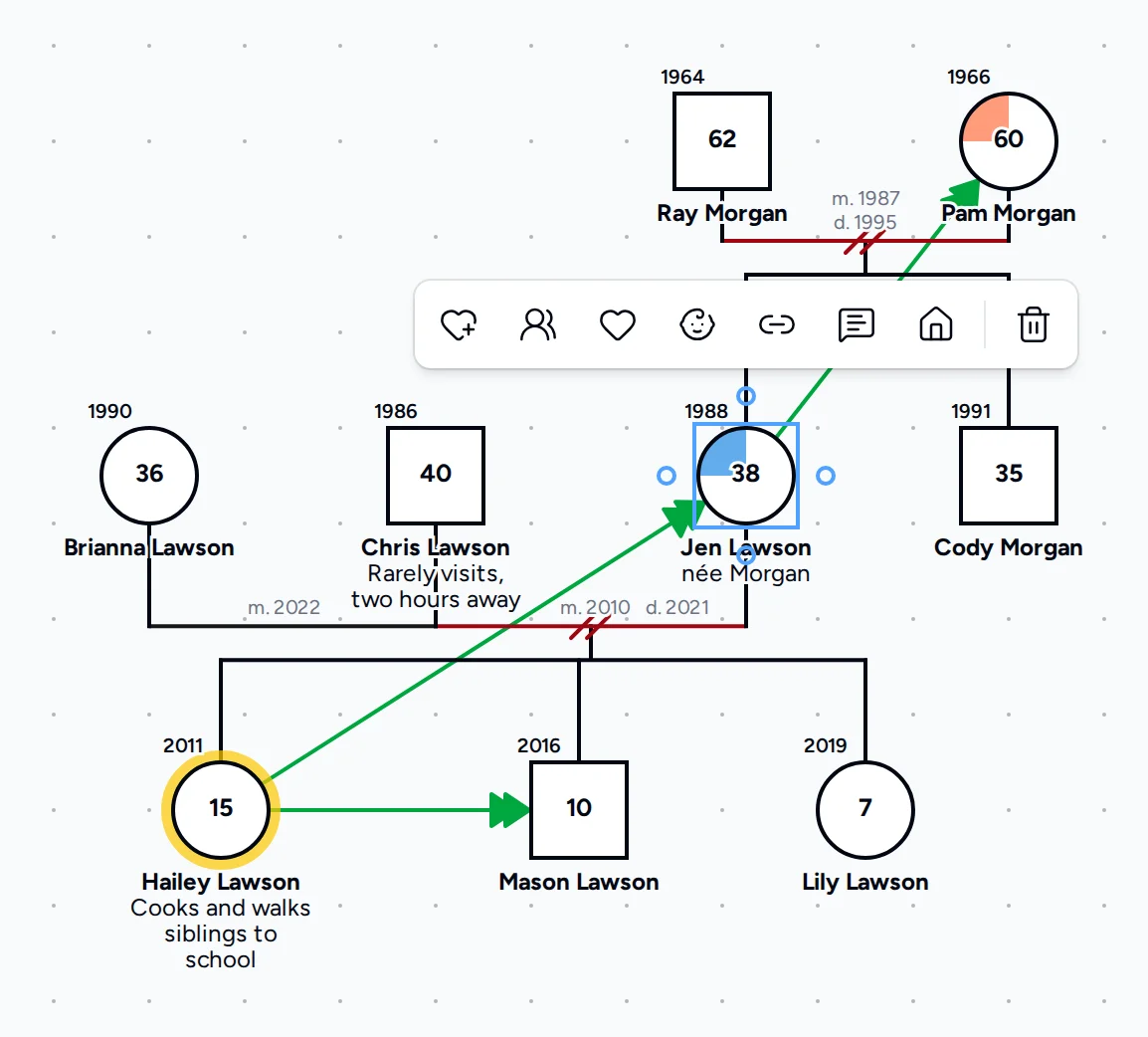
Select a person and add their parents, a partner or a child from the toolbar, with the connecting line already drawn, so you can add both sets of grandparents in a few clicks.
When you export a PNG or PDF, a key is added with only the conditions, symbols and lines on the genogram, so a reader can tell the diabetes color from the cancer color.
Questions people ask
What is a nursing genogram?
A nursing genogram is a diagram of a patient's family over at least three generations, drawn as part of a family assessment. Each relative's health conditions are added as colored fills, with the age at onset and the age and cause of every death, so the nurse can see which conditions recur in the family.
Nursing genogram exampleWhat should a family health history genogram include?
Draw at least three generations on both the mother's and the father's side, with each relative's conditions and the age at onset, the age and cause of every death, the patient's own risk factors such as smoking, and a key with every condition color. Where the patient does not know a relative's history, write "unknown" in the note.
Medical genogram guideWhat is the difference between a genogram and an ecomap in nursing?
A genogram is drawn across the generations of a family, with its births, partnerships, deaths and health history. An ecomap is drawn for the patient or family as they live now, with a circle for each system outside the family, such as work, school, clinics and support groups.
Genogram vs ecomapIs Genogram Pro free for nursing students?
The free genogram maker needs no account, and its PNG and PDF exports have a small Genogram Pro badge. The Professional plan is paid and has a 7-day trial, and students at participating schools can get it at no cost for a year. Sign up with your school email.
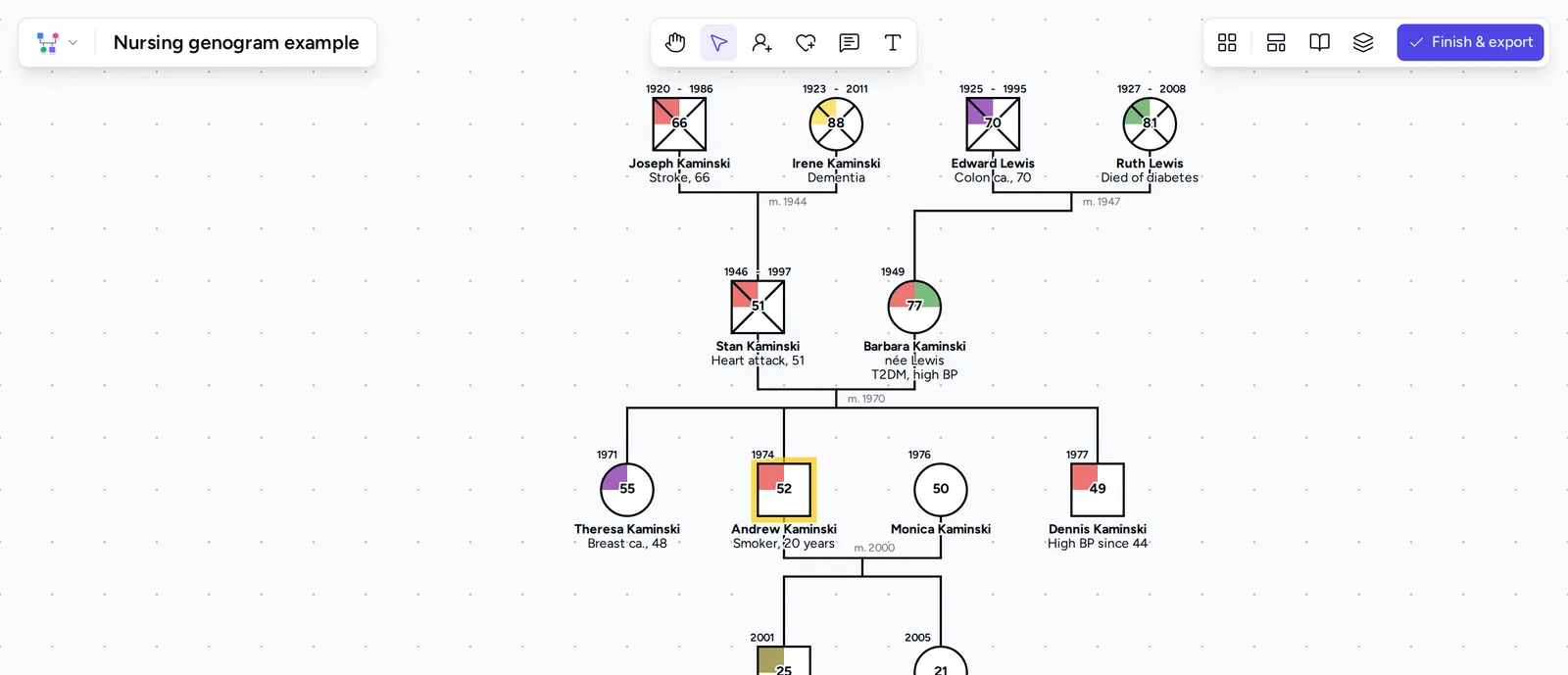
Start a family health history from the Kaminski family
Open it in the editor, swap in your own names and dates, and export it as a PNG or PDF.