
Career genogram: example, template and questions
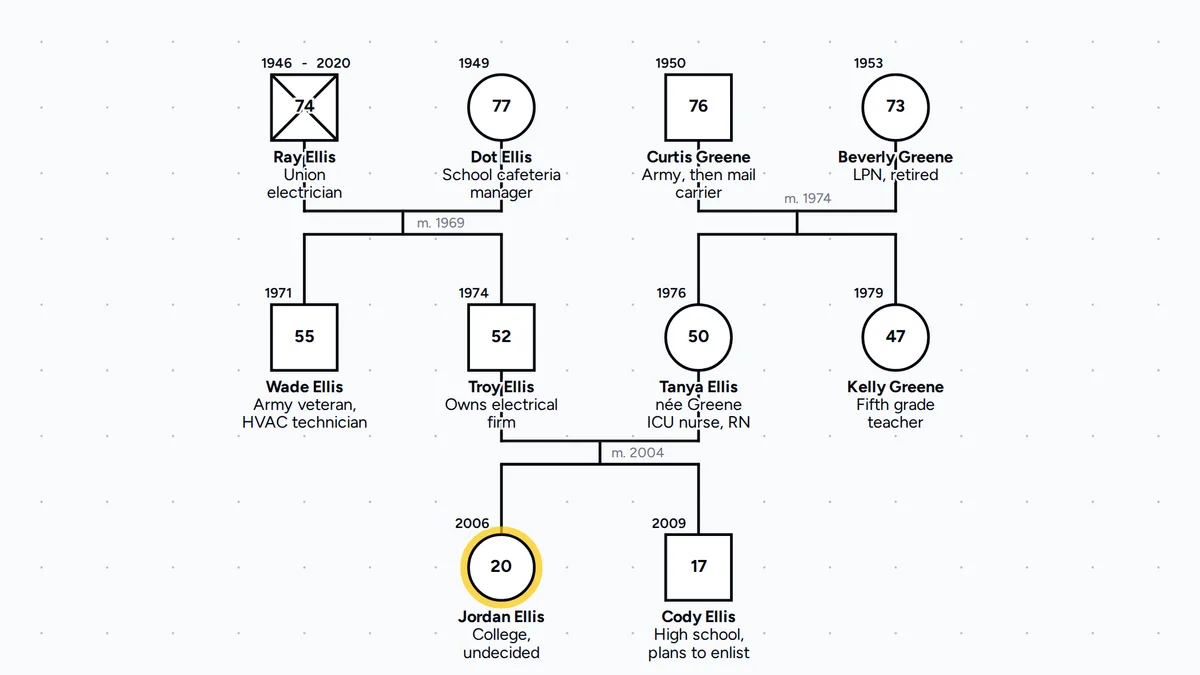
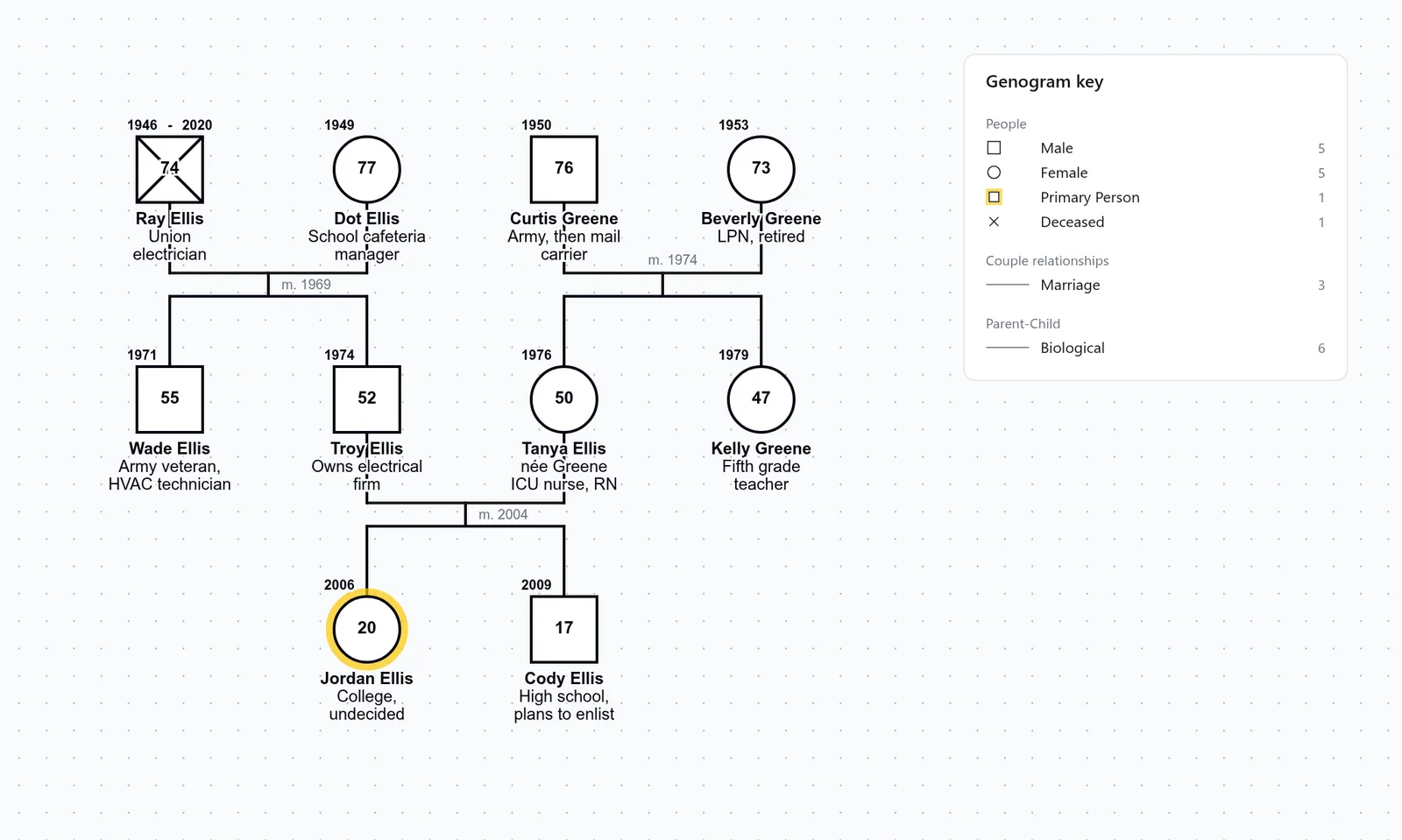
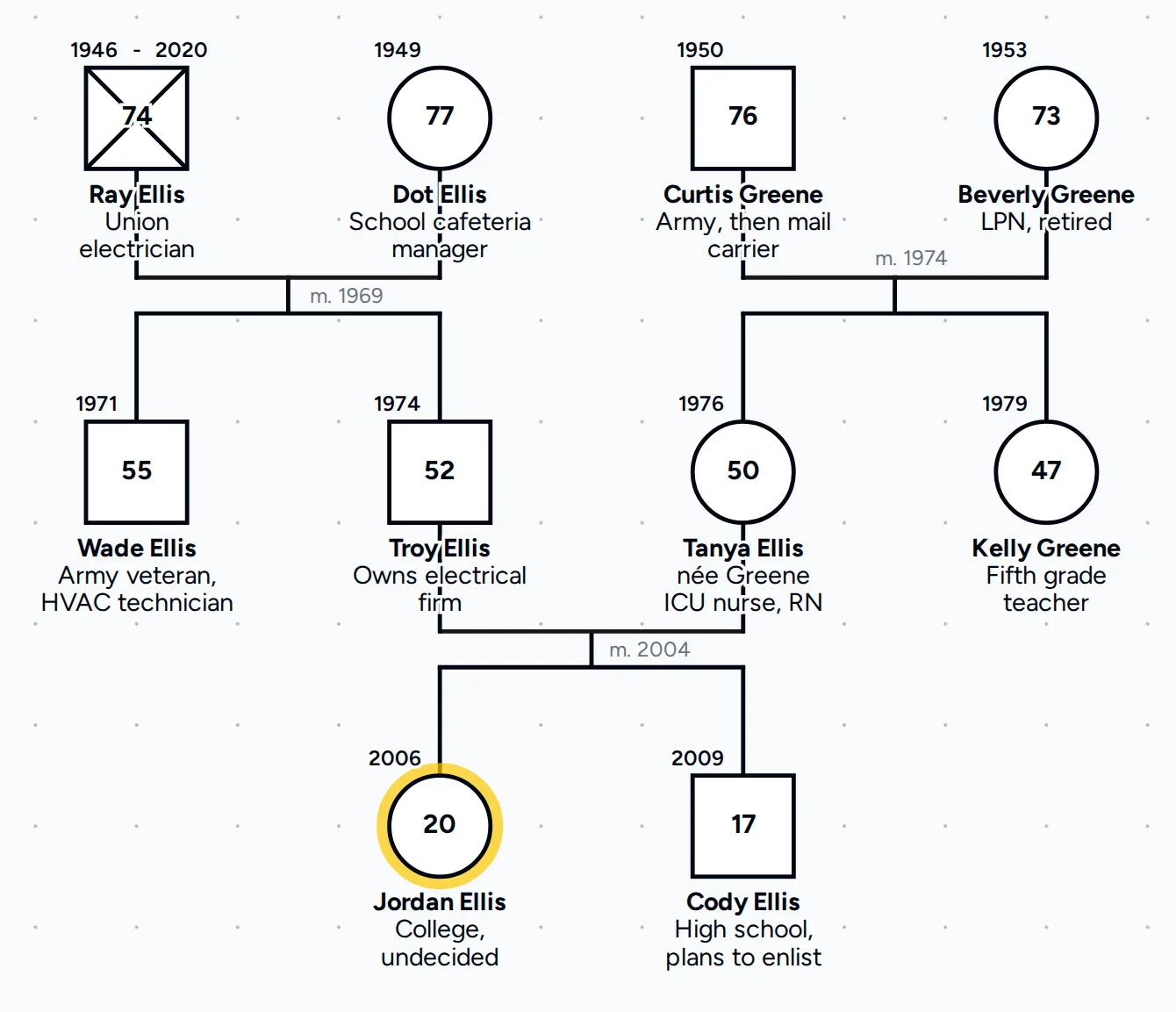
This career genogram shows Jordan Ellis, 20, choosing between nursing and her father's electrical firm, in a family where the men worked in the trades or served in the Army and the women on her mother's side became nurses and teachers.
Updated October 2026Based on Okiishi (1987), "The genogram as a tool in career counseling", Journal of Counseling & Development
Cite this diagram
Genogram Pro. (2026, October 19). Career genogram: example, template and questions [Diagram]. https://genogrampro.com/guide/career-genogram
Trades and the Army
Ray was a union electrician, and his son Wade served in the Army before he became an HVAC technician.
Nursing and teaching
Beverly trained as an LPN, her daughter Tanya became an RN, and Kelly teaches fifth grade.
The family business
Troy owns an electrical firm and expects Jordan to join him as an apprentice.
Jordan's choice
Jordan, 20, is deciding between nursing prerequisites and an apprenticeship with her father.
Planning to enlist
Cody, 17, plans to enlist, as his uncle Wade and his grandfather Curtis did.
Write each relative's job under their name
A career genogram is an ordinary family genogram with one fact added for every person, the work they did, in the same way that a cultural genogram adds heritage and identity. Jordan's counselor asked her to draw this one before their next session, because her father expects her to join his firm while her mother and grandmother, both nurses, hope she chooses nursing.
Follow these rules so the family's work pattern is easy to read:
- Draw at least three generations. Okiishi used three, so draw all four of Jordan's grandparents.
- Include aunts and uncles. Wade's Army service and Kelly's teaching show the paths that Troy and Tanya did not take.
- Write the job title, not a category. Use a few words such as "Union electrician" or "ICU nurse, RN", and add the credential when it matters, as in "LPN, retired" for Beverly.
- Record people who are not in paid work. Write what they do instead, as with Jordan's "College, undecided" and Cody's "High school, plans to enlist", and name the work of anyone who kept house or cared for family.
- Leave out emotional and medical detail. Add it only when it shaped someone's work, which is why this example has no emotional lines or conditions.
Questions to ask relatives
Career counselors who use the method suggest asking each relative:
- What did you do for work, why did you choose it, and who or what influenced you?
- When did you decide on that work?
- What did success mean in our family, and where did your expectations about work come from?
- Did the family call some jobs better or more acceptable than others, and was any job "just to put bread on the table"?
They also ask the client whether they were expected to do better than their parents and what they were supposed to become. This page adds three questions of its own:
- Which jobs did the family expect of men, and which of women?
- Who was satisfied with their work, and who was not?
- Who broke the family pattern, and how did the family react?
How to build this genogram
Draw Jordan's family
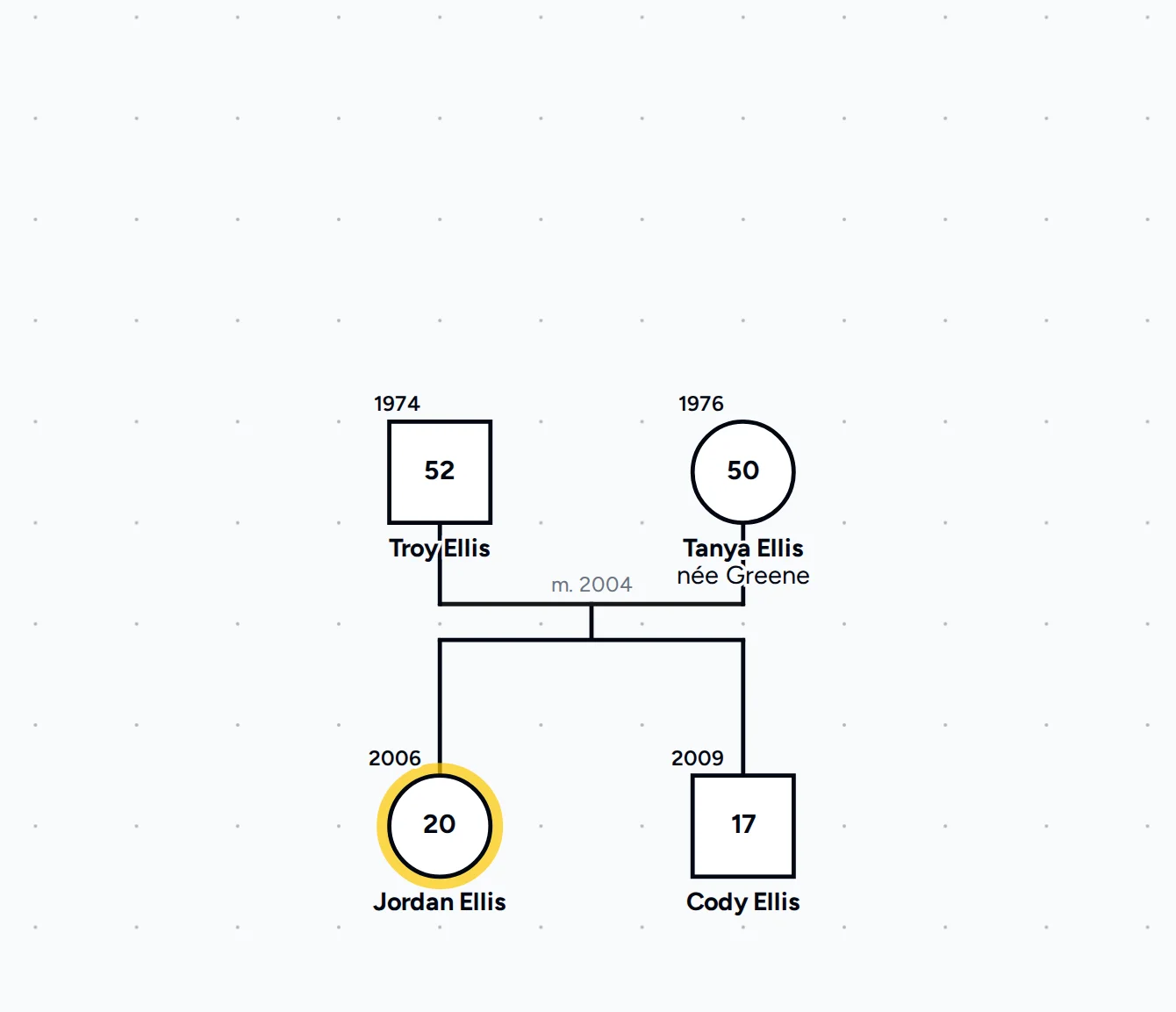
Add Jordan and click the focus person button. Add her parents Troy and Tanya with a 2004 marriage, entering Greene as Tanya's maiden name, then add Jordan's younger brother Cody.
Add aunts, uncles and grandparents
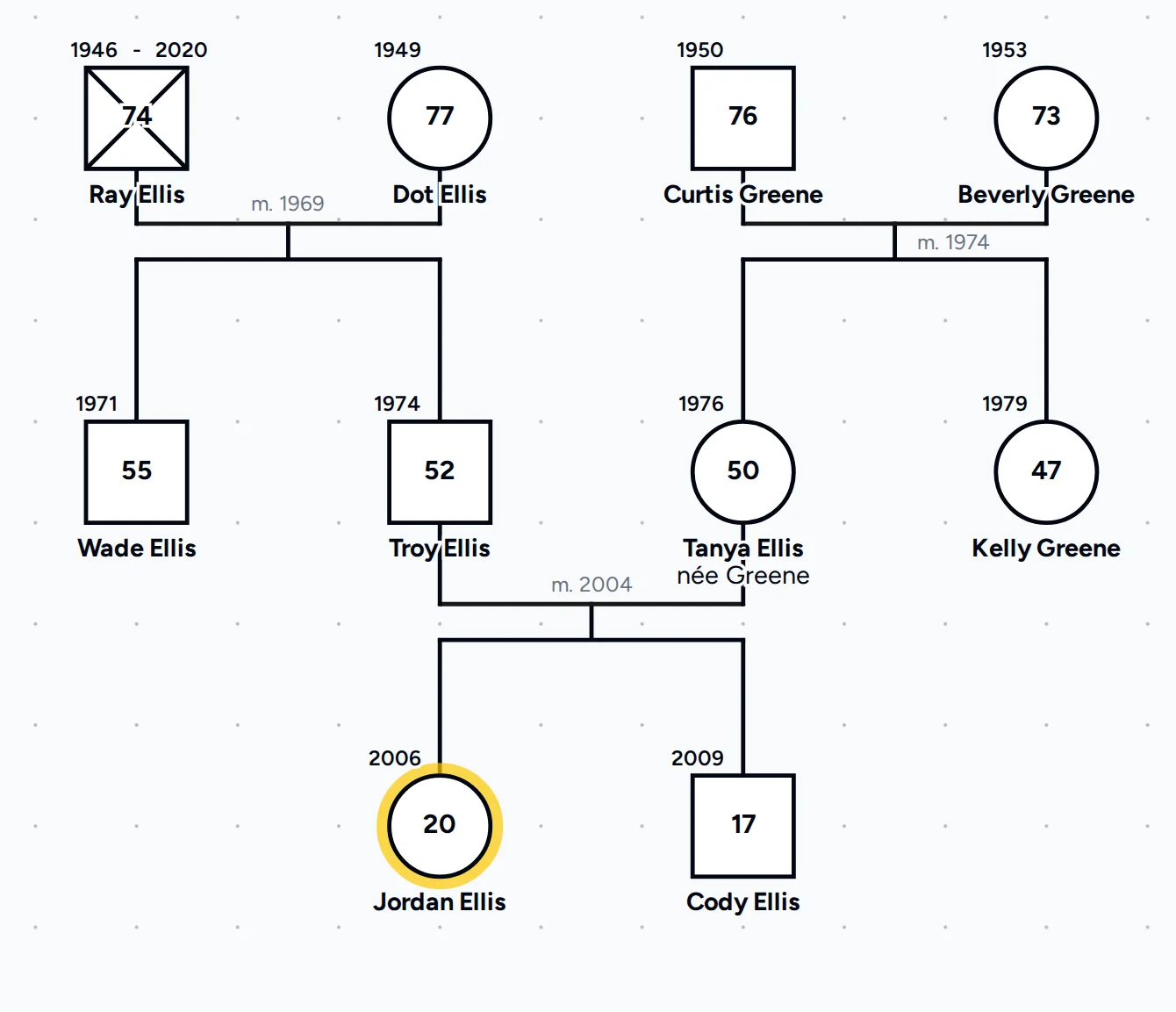
Add Troy's brother Wade and Tanya's sister Kelly. Then add Troy's parents Ray and Dot with a 1969 marriage, marking Ray as deceased in 2020, and Tanya's parents Curtis and Beverly with a 1974 marriage.
Write in each person's job
Click Add property, name it Occupation, and turn on Available on all people and Show in diagram. Type a short job title for all ten people, then export.
Questions people ask
Read the step-by-step guide to making a genogramWhat is a career genogram?
A career genogram is a family genogram that records each relative's work, so a client and a career counselor can see the jobs and expectations in the family. Okiishi described a three-generation version as a career counseling tool in 1987.
What questions do you ask for a career genogram?
Ask each relative what they did for work, why they chose it and who influenced them, what counted as success in the family, and whether some jobs were seen as better than others. Career counselors also ask clients whether they were expected to do better than their parents.
How far back should a genogram go?
Draw at least three generations, as Okiishi did, which for Jordan means her grandparents, her parents, aunt and uncle, and Jordan and her brother. Add a fourth generation when a family trade or business goes back further.
Is there a free career genogram template?
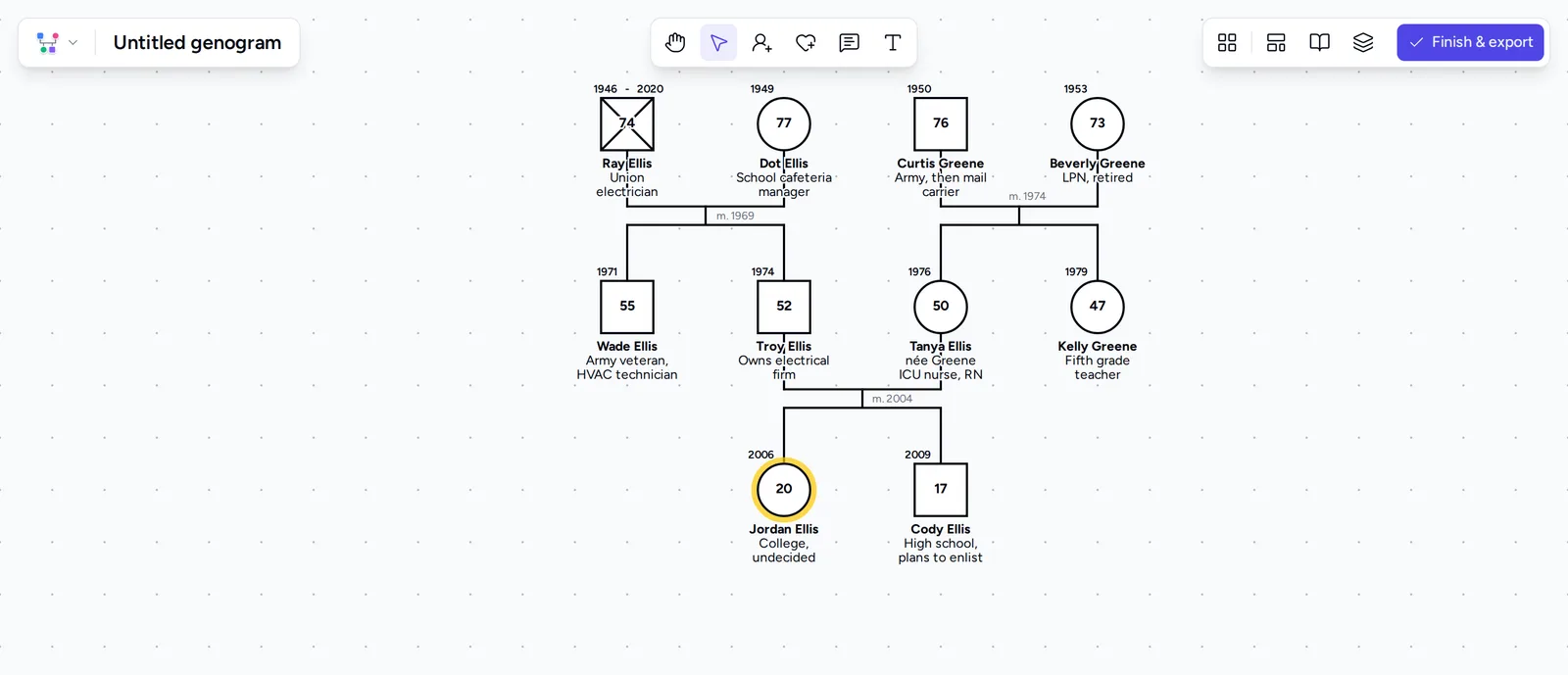
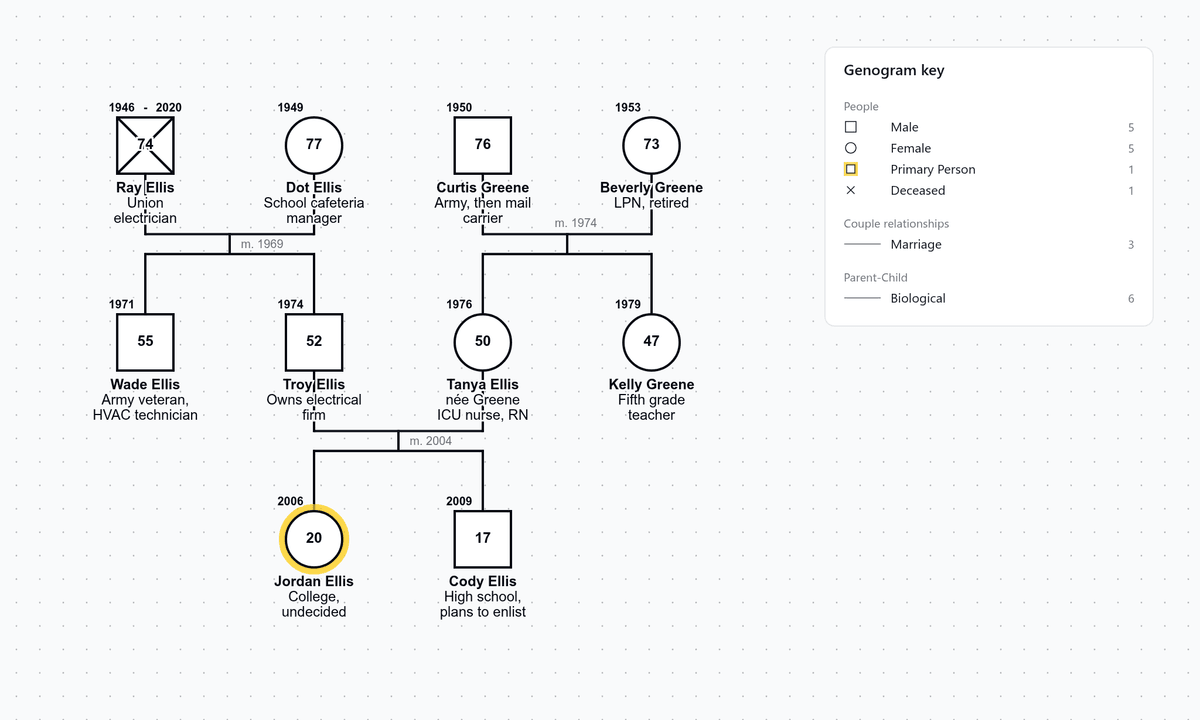
The Ellis family genogram on this page opens as a template in the free editor, which needs no account. Replace the names and job titles with your own family, then export it as a PNG or PDF.
What should I include in a genogram?
Include everyone across at least three generations with their names, birth years and death years, and the lines for marriages and children. A career genogram adds each person's job or schooling under the name and leaves out emotional lines and health conditions unless they shaped someone's work.
Start your genogram from this example
Open it in the editor, swap in your own names and dates, and export it as a PNG or PDF.